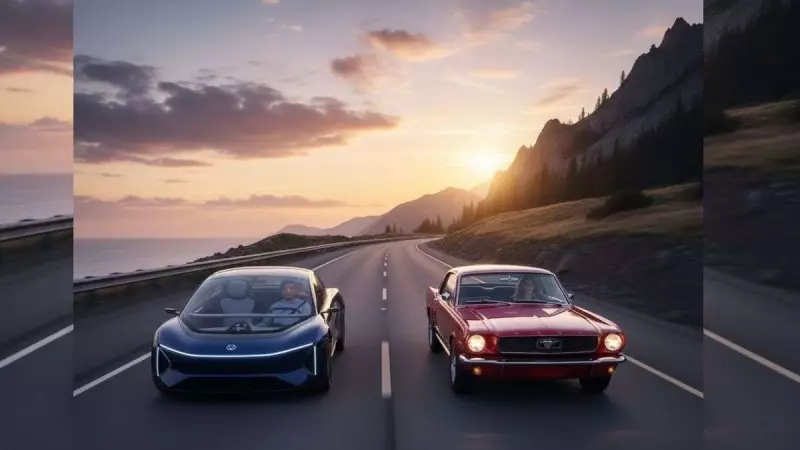
India's vast and complex road network is on the cusp of a significant technological leap. A major upgrade, set to roll out from 2026, promises to fundamentally change how vehicles interact with each other and their surroundings, aiming to drastically improve safety and driver assistance.
What is Vehicle-to-Vehicle (V2V) Technology?
At its core, Vehicle-to-Vehicle (V2V) technology is a communication system that allows cars, trucks, buses, and other vehicles to "talk" to each other. This is not about internet connectivity for entertainment, but a dedicated, fast, and secure wireless network where vehicles continuously exchange vital data. This data includes information like:
- Speed and direction of nearby vehicles.
- Braking status (if a vehicle ahead is suddenly braking hard).
- Position and location data to anticipate potential collisions.
Imagine a scenario where a truck several vehicles ahead of you slams on its brakes in dense fog. With V2V, your car would receive an instant alert about this event long before you could see the brake lights through the mist, giving you crucial extra seconds to react safely.

The 2026 Roadmap for India's Automotive Future
The implementation of this technology is not a distant dream but a planned reality. The upgrade is scheduled to begin its integration into the Indian automotive ecosystem from 2026. This move aligns with global trends and India's own push towards smarter, safer transportation infrastructure under initiatives like the National Automotive Policy and the broader Smart Cities mission.
The technology will work by creating a mesh network of connected vehicles. Each vehicle acts as a node, broadcasting and receiving signals within a range of several hundred meters. This system is designed to be low-latency, meaning the information exchange happens in near real-time, which is critical for safety applications.
How V2V Will Support Drivers and Enhance Safety
The primary benefit of deploying V2V communication across Indian roads is the monumental boost to road safety. India has one of the world's largest road networks and unfortunately, a high rate of accidents. This technology aims to address several key pain points:
Preventing Collisions: The system can warn drivers about potential forward collisions, lane-change dangers, and vehicles in blind spots, even those obscured by other cars or poor weather conditions.
Traffic Flow and Efficiency: By communicating intent, such as braking or turning, V2V can help smooth traffic flow, reducing the "accordion effect" of sudden stops that cause jams. It can also enable better coordination at intersections.
Driver Assistance Systems: V2V data will supercharge existing Advanced Driver Assistance Systems (ADAS). Features like autonomous emergency braking and adaptive cruise control will have more accurate and earlier information to act upon, making them far more effective.
Support for Vulnerable Road Users: Future extensions of the technology could include communication with infrastructure (V2I) and even pedestrians' smartphones, creating a protective digital shield for everyone on the road.
The Path Forward and Challenges
For this vision to become a reality, a coordinated effort is required. Automakers will need to start equipping new vehicles with the necessary hardware and software. Policymakers and regulators must establish clear standards and protocols to ensure all vehicles "speak the same language." There are also considerations around data security and privacy that must be robustly addressed.
However, the potential payoff is immense. The integration of Vehicle-to-Vehicle technology represents the next logical step in automotive evolution for India. It moves beyond individual smart cars to creating an intelligent and cooperative transportation web.
As 2026 approaches, Indian drivers can look forward to a driving environment that is not just about reacting to what is seen, but being informed about what lies ahead, unseen. This upgrade promises to be one of the most impactful changes for Indian roads, potentially saving thousands of lives and making daily commutes safer and less stressful for millions.