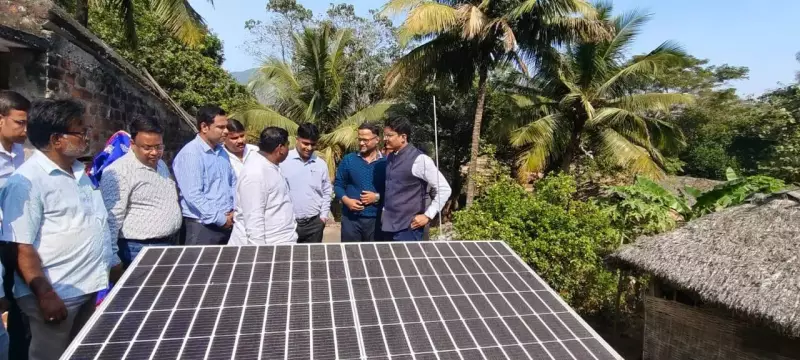
In a landmark achievement for renewable energy and rural development, two remote tribal villages in Odisha's Cuttack district have been completely electrified using solar power. Olaba and Kandakela Devabhumi, located in the Narsinghpur block, officially became the state's first tribal villages to be powered entirely by solar energy on Tuesday, according to the district administration.
A Swift Transition to Green Energy
The ambitious project was executed by TP Central Odisha Distribution Limited (TPCODL) and was remarkably completed within a span of just 25 days. It has successfully brought electricity to approximately 80 households across the two villages through the installation of rooftop solar panels. This initiative ensures complete electrification while relying solely on a clean, renewable source.
For the residents, this means an end to darkness and unreliable power. The administration highlights that the availability of uninterrupted solar power is set to transform daily life. It is expected to significantly improve household lighting, extend study hours for children, enhance healthcare services, and support various livelihood activities, all while reducing monthly electricity expenses for families.

Funding and Focus on Equity
The project was made financially viable through a collaborative funding model. Collector of Cuttack, Dattatreya Bhausaheb Shinde, detailed the contributions: the central government provided a subsidy of Rs 30,000 per installation, and the state government added Rs 25,000. The remaining beneficiary contribution was covered by the district administration using funds from the District Mineral Foundation (DMF), with a total of Rs 10 lakh spent on this pioneering endeavor.
Significantly, the initiative has been specifically targeted at Below Poverty Line (BPL) families to ensure equitable access to reliable electricity. This focus underscores the project's core mission of social equity alongside environmental sustainability.
A Model for the Future
Collector Shinde emphasized the broader vision behind the project. "Bringing clean and reliable power to remote tribal villages is a crucial step towards social equity," he said. "These villages will now serve as a model of energy self-sufficiency and environmental sustainability for other regions to follow."
Beyond the immediate practical benefits, the project is anticipated to foster greater awareness about renewable energy solutions. It is hoped that this success will encourage similar interventions in other remote and underserved pockets of Cuttack district and beyond.
The local community has welcomed the development with optimism. "We welcome the initiative. The power supply would create new opportunities in education, skill development and income generation," said Rajura Munda, a resident of Narasinghpur village. The electrification of Olaba and Kandakela Devabhumi marks a bright step forward, illuminating lives and paving a sustainable path for rural India.