Urban Mobility Crisis: India's Road Safety Challenge Intensifies
During peak traffic hours, urban roads transform into dense mobility environments where buses, cars, two-wheelers, delivery vehicles, and pedestrians compete for limited space. While this constant movement sustains urban economic activity, it simultaneously escalates safety risks as existing infrastructure and traffic management systems struggle to accommodate escalating traffic volumes.
As urbanization accelerates across India, designing safer and more efficient mobility systems has emerged as a critical priority. The Ministry of Road Transport and Highways documented more than 460,000 road accidents in 2023 alone, with a substantial proportion occurring in urban areas due to heavy traffic congestion and complex intersections.
Real-Time Intelligence Revolutionizes Urban Traffic Management
Urban traffic management is undergoing a fundamental transformation, shifting from static signal systems to dynamic, data-driven control enabled by continuous real-time monitoring. Networks of cameras, roadside sensors, and connected vehicle inputs now transmit comprehensive traffic data to central command centers, where sophisticated analytics assess congestion levels, sudden speed fluctuations, and risky driving behaviors.

Major Indian cities including Bengaluru, Hyderabad, and Mumbai have begun implementing adaptive traffic signals that automatically adjust signal cycles based on real-time vehicle density at intersections. This intelligent approach significantly improves traffic flow while reducing abrupt stops that frequently cause rear-end collisions. Furthermore, real-time monitoring enables faster incident response and efficient traffic rerouting during emergencies.
Vehicle Intelligence and Advanced Safety Systems
Urban road safety is being fundamentally transformed by vehicle technologies that integrate Advanced Driver Assistance Systems (ADAS). Utilizing sophisticated combinations of cameras, radar sensors, and onboard computing power, ADAS assists drivers in detecting potential hazards and making safer decisions in complex urban environments.
Critical features like automatic emergency braking, lane departure warnings, and adaptive cruise control substantially reduce driver reaction times in dense city traffic. Visibility challenges, particularly during nighttime conditions or on poorly illuminated roads, are now being addressed with artificial intelligence-powered night vision systems that enhance image clarity, reduce visual noise, and effectively highlight pedestrians, vehicles, and infrastructure elements.
Many of these advanced safety solutions are delivered through scalable software platforms that continuously improve vehicle perception capabilities and overall safety performance through regular updates and enhancements.
Actuator-Based Dry Brake Systems Enhance Vehicle Safety
Vehicle braking architecture is progressively transitioning toward actuator-driven dry brake systems that utilize electromechanical components rather than traditional hydraulic assemblies. In this innovative configuration, electronic control units coordinate with compact actuators to precisely regulate braking force at the wheel level, dramatically improving accuracy and response speed.
The system operates seamlessly alongside brake-by-wire configurations, enabling braking commands to be transmitted electronically instead of through conventional fluid pressure mechanisms. This advanced design facilitates superior integration with cutting-edge safety features and regenerative braking systems. For electric vehicles specifically, the compact structure helps engineers optimize space within already crowded vehicle platforms while maintaining exceptional braking performance.
Pillar-to-Pillar Head-Up Displays Transform Driver Interfaces
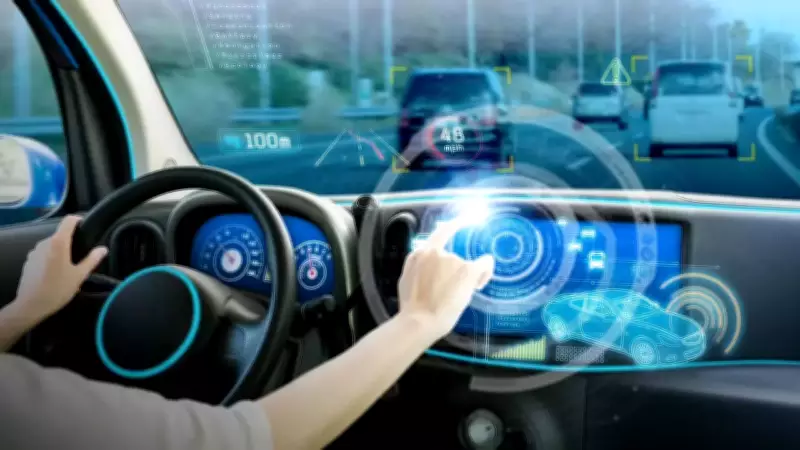
Automotive cockpit design is expanding beyond conventional instrument clusters with wide head-up display systems that stretch across the windshield from one pillar to the other. Building upon technology originally developed for aviation applications, modern HUD platforms project essential navigation guidance, critical alerts, and key vehicle information directly into the driver's forward field of vision.

Recent advances in projection technology and optical engineering now permit the display area to extend across a significantly larger section of the windshield glass, creating a more immersive and intuitive interface. This technological breakthrough enables visual cues such as route directions or hazard warnings to appear precisely aligned with the actual road ahead, helping drivers remain fully informed without diverting their attention from the driving task.
Building the Next Generation of Safer Cities
Urban mobility systems are becoming increasingly digital, connected, and data-driven. Intelligent technologies empower city authorities to understand traffic behavior in unprecedented detail, anticipate potential risks proactively, and optimize transport networks with far greater precision than conventional systems ever permitted.
For India's rapidly expanding metropolitan areas, this technological transformation represents an essential development. By systematically integrating smarter vehicles, responsive infrastructure, and real-time traffic management solutions, urban planners can create comprehensive mobility systems that effectively reduce accidents, improve air quality, and support sustainable urban growth for future generations.