A study by Indian researchers has demonstrated that waste rice husk and sugarcane residue, after thermo-chemical treatment, can partially replace cement in concrete, improving strength and reducing environmental impact.
Key Findings on Concrete Performance
The hybrid concrete achieved a 12.6% increase in compressive strength when 10% of cement was replaced with rice husk ash, and an 8.2% increase with sugarcane residue ash, compared to conventional concrete. The researchers attributed this enhancement to microstructural densification and favorable chemical reactivity and bonding characteristics.
“The enhancement in concrete performance is attributed to microstructural densification and certain chemical reactivity and bonding characteristics. These characteristics confirm that rice husk and sugarcane residue are effective partial cement replacements, contributing to reduced carbon emissions and promoting sustainable construction practices,” the researchers said.

Study Details and Collaboration
The study was conducted by eight researchers from the Central Road Research Institute (New Delhi), Symbiosis International (Pune), K.R. Mangalam University (Gurugram), Jamia Millia Islamia (New Delhi), Al-Falah University (Faridabad), and King Faisal University (Saudi Arabia). It was published in Scientific Reports, a peer-reviewed journal, on June 25.
Agricultural Waste Management Challenge
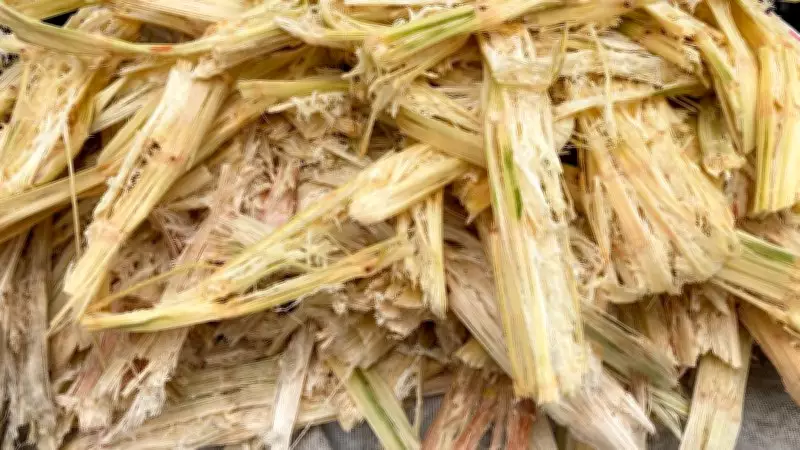
India generates over 100 million metric tons of biomass waste annually, with rice husk and sugarcane bagasse being the two most significant agricultural residues. Improper disposal of these residues poses major waste management and environmental challenges.
“Countries in tropical regions with high annual agricultural production have generated large quantities of agricultural residues which are often disposed of through unsuitable methods,” the researchers noted, highlighting the difficulty in waste management and environmental preservation.
Biomass Gasification as a Solution
Biomass gasification has emerged as a sustainable waste management option, converting agricultural waste into syngas—a combustible gas used for electricity generation. This process reduces environmental pollution and provides useful energy. The global biomass gasification market is projected to grow at a compound annual growth rate of approximately 21.5% between 2023 and 2028, aligning with India's renewable energy goals.
The researchers pointed out that thermochemical upgrading of agro-by-products improves their fuel characteristics, making them suitable for thermal power plants and biomass-to-energy applications. The waste ash from these processes can then be used in green concrete.
Implications for Sustainable Construction
This approach not only addresses waste management but also reduces cement production, a major source of carbon emissions. By partially replacing cement with agricultural residues, the construction industry can lower its carbon footprint while effectively managing waste. The study supports the circular economy model, turning waste into valuable resources.