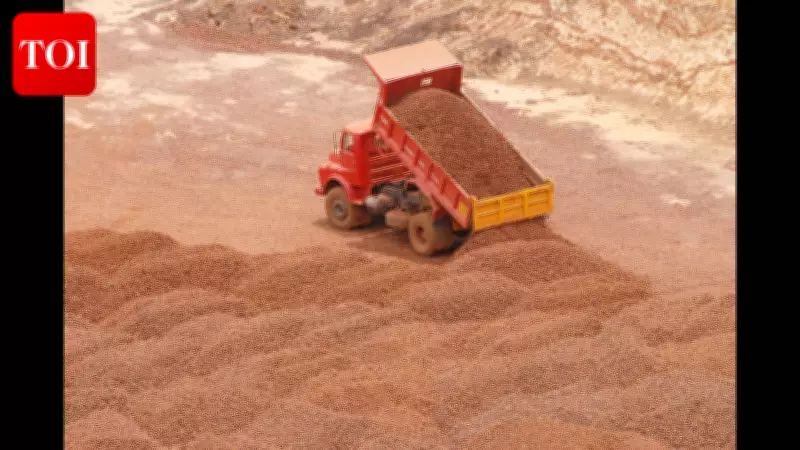
Rare earth elements and critical minerals are being regarded as more “precious” than gold because they are indispensable to modern technology, clean energy and national defence. While gold remains largely a store of value, rare earth materials such as neodymium and gallium are essential for manufacturing modern electronics, aerospace equipment and green technologies. Global supply chains for critical minerals are highly concentrated, and many nations depend heavily on imports, making these resources strategically more sensitive than traditional precious metals. The global transition towards renewable energy, including wind turbines and solar power systems, is also heavily dependent on these specialised minerals.
Strategic Importance
Former head of the geology department at Patna University, Atul Aditya Pandey, said, “Moreover, control over the refining and processing of critical minerals translates directly to global economic and defense supremacy.” Pandey said the recent discovery of rare earth and critical mineral deposits in Bihar could bring tangible benefits to society. Minerals such as cobalt, found in Banka district, along with nickel and various rare earth elements, are essential for manufacturing electric vehicle (EV) batteries, solar panels and consumer electronics. Domestic mining, he said, would reduce import costs, making EVs, renewable energy technologies and modern appliances more affordable for consumers.
He added that the proposed establishment of “rare earth corridors” could transform towns into manufacturing hubs for semiconductors and electronics. This, in turn, could encourage local technology entrepreneurship and create specialised technical training and higher-paying employment opportunities for young people.

Powering Modern Industries
The importance of rare earth elements extends across several high-impact industries. Permanent magnets made from neodymium, praseodymium and dysprosium represent one of the most significant applications. These powerful yet lightweight magnets are used in electric vehicle motors, wind turbine generators, smartphones, computer hard drives and MRI machines.
Lanthanum, cerium and neodymium are critical for battery and energy storage technologies. They are extensively used in nickel-metal hydride (NiMH) and lithium-ion batteries that power hybrid and electric vehicles. Cerium and lanthanum also play an important role as catalysts. They are widely used in petroleum refining and automotive catalytic converters, helping improve fuel production and reduce harmful emissions.
From Consumer Devices to Defence
Rare earth elements are equally important in optics and precision manufacturing. Cerium oxide is used for polishing optical lenses, mirrors and smartphone screens, while lanthanum improves the performance of camera and telescope lenses. Europium, terbium and yttrium provide the vibrant colours used in LED lighting, fluorescent lamps and flat-screen displays.
In the defence and aerospace sectors, scandium, samarium and yttrium are vital for radar systems, missile guidance technologies, sonar equipment and lightweight aerospace alloys, highlighting their strategic significance.
Growing Demand
Former GSI director N Dayal said, “Rare earth elements will continue to be of considerable interest for the foreseeable future, with demand likely to grow.” He added, “With the renewed focus on REE by policy-makers and investors, it is important to ensure sustained funding of research on the entire life cycle of the REE, from exploration and mining to manufacture, recycling, re-use and disposal.” Dayal said, “It is also essential to gather and maintain reliable and comprehensive information on REE geology, deposits, resources, reserves, production, trade and consumption.”
As the global race for critical minerals intensifies, rare earth elements are becoming central to economic growth, technological advancement and national security. Bihar’s recent discoveries have placed the state within this strategic landscape, underscoring the growing importance of resources that increasingly matter more than gold in the modern world.