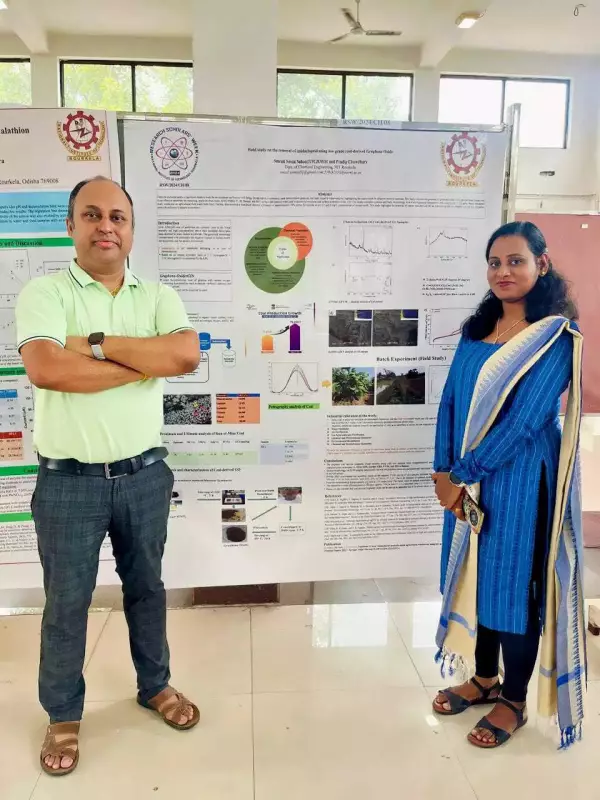
In a groundbreaking development, researchers at the National Institute of Technology (NIT) Rourkela have engineered an innovative and low-cost system that utilizes low-grade raw coal to cleanse agricultural wastewater contaminated with hazardous pesticide residues. This novel approach transforms an environmentally polluting fossil fuel into a tool for ecological benefit.
The Pesticide Pollution Crisis in Indian Waterways
The research, recently published in the International Journal of Environmental Research, addresses a critical and widespread issue. Professor Pradip Chowdhury, who led the team alongside research scholar Smruti Smita Sahoo, highlighted the severity of the problem. Chemical pesticide use is rampant in India, with excess chemicals frequently leaching into farm drainages and ultimately polluting rivers and lakes.
"Several hazardous pesticides, which are banned in many European nations, are being used in India," Chowdhury stated. To assess the contamination, the team collected agricultural wastewater samples during peak cultivation periods from districts including Cuttack, Khurda, and Jagatsinghpur. Analytical results were alarming: concentrations of dangerous pesticides consistently exceeded permissible limits set by the World Health Organization (WHO).

"The direct discharge of such contaminated effluents presents severe risks to human and animal health, aquatic ecosystems, and the surrounding environment," Chowdhury explained. He added that many of these compounds are persistent, tough to remove with conventional methods, and linked to endocrine disruption, hormonal imbalances, and cancer.
Turning 'Waste' Coal into a Purification Asset
India, as the world's second-largest coal producer, generates massive amounts of low-grade coal. This type of coal is often underutilized in power plants due to its high ash content and low calorific value. The NIT Rourkela team saw an opportunity in this abundant resource.
"Coal samples collected from various locations in the state were pre-treated and characterised, revealing an ash content as high as 41%, a porous structure, low gross calorific value, and mineralogical characteristics favourable for water purification," Chowdhury detailed. The researchers then designed a lab-scale adsorption column using this raw coal as a low-cost adsorbent material.
Promising Results and Future Prospects
Research scholar Smruti Smita Sahoo reported that the lab-developed system delivered satisfactory results in purifying pesticide-laden agricultural water. The system is envisioned as a simple, net-like barrier that can be placed at water release points on farms.
Looking ahead, Sahoo indicated that future research will focus on developing advanced coal-derived carbon materials like biochar and graphene oxide to boost treatment effectiveness even further.
Overall, this study presents a compelling sustainable 'waste-to-wealth' strategy. It demonstrates how a locally available and otherwise problematic resource can be repurposed to tackle a pressing regional environmental challenge, offering a pragmatic and economical solution to agricultural water pollution.