

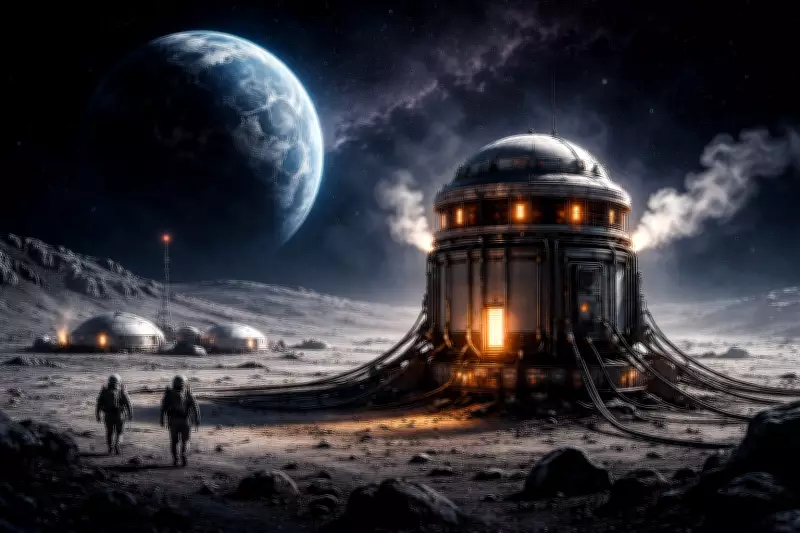
NASA Targets 2030 for Lunar Nuclear Reactor to Power Moon Missions
Generating energy in the harsh environment of space presents challenges vastly different from those on Earth. While solar panels are a common solution, they prove inadequate on the Moon where darkness persists for approximately two weeks during the lunar night. During these extended periods, temperatures plummet dramatically, causing equipment to freeze and batteries to drain rapidly. For astronauts living and working far from our home planet, a consistent and reliable power supply is not merely convenient—it is absolutely critical for sustaining life support systems, enabling communication with Earth, and maintaining essential heating.
From Radioisotope Systems to Fission Reactors
For decades, deep space missions like Voyager 1 and Voyager 2 have depended on radioisotope power systems. These devices convert the heat generated by decaying plutonium into electricity, offering remarkable reliability but producing only limited power output. A sustained human presence on the lunar surface demands significantly greater energy capacity. The United States is now advancing toward deploying nuclear fission systems specifically engineered for operation on the Moon. These are not the small radioisotope units of the past but compact reactors designed to deliver steady, uninterrupted electricity for many years. NASA is targeting the installation of such a reactor on the Moon around the year 2030, as space agencies plan for longer missions and more permanent infrastructure beyond low Earth orbit.
NASA's Fission Surface Power System
NASA has outlined detailed plans for a fission surface power reactor capable of operating for up to ten years without requiring refueling. This innovative unit would provide consistent electrical power throughout the long lunar nights and even within permanently shadowed regions of the Moon. Engineers are actively studying various designs that carefully balance power output with overall weight, since every single kilogram must be launched from Earth at tremendous cost. The primary objective extends beyond experimental science; it aims to establish stable, dependable power for habitats, scientific research equipment, and future resource processing facilities on the lunar surface.

Unique Engineering Challenges for Space Reactors
Designing a nuclear reactor for space involves confronting a completely different set of engineering constraints compared to building one on Earth. Water cooling, commonly used in terrestrial nuclear plants, is far less practical in space due to the heavy containment systems it necessitates. Researchers are exploring alternative coolants and compact core designs to significantly reduce overall mass. Temperature tolerance represents another major constraint. Space reactors may need to operate at higher temperatures to improve thermal efficiency, while all components must withstand intense radiation, vacuum conditions, and extreme cold without any possibility of routine maintenance.
Terrestrial reactors typically shut down every few years for thorough inspection and servicing. In contrast, a lunar reactor would be required to function reliably for an entire decade with absolutely no servicing. Critical aspects under rigorous review include advanced electronics, radiation shielding, and long-term fuel integrity. Durability is not an abstract concern here—if a system fails on the Moon, replacement or repair would be extraordinarily difficult and costly.
Idaho National Laboratory Supports Development
A recent strategic report, supported by the Idaho National Laboratory, outlines several potential development pathways for space nuclear power. Options range from a larger system producing 100 to 500 kilowatts, led by federal agencies, to smaller public-private projects generating below 100 kilowatts. There is also active discussion about deploying limited demonstration units to establish the necessary regulatory and technical groundwork. The Idaho National Laboratory is expected to test specialized fuels and materials using advanced facilities like the Transient Reactor Test Facility. The laboratory already supports cutting-edge terrestrial advanced reactor research, and the shift toward space applications builds directly upon that established expertise, though project timelines remain ambitious.

Ultimately, policy decisions and funding allocations will shape progress just as much as engineering breakthroughs. Developing space nuclear capability carries significant geopolitical weight alongside its immense scientific value. While the reactor planned for the Moon remains in the design phase, foundational work is steadily advancing through dedicated laboratories and expert review panels, paving the way for humanity's next giant leap in space exploration.





