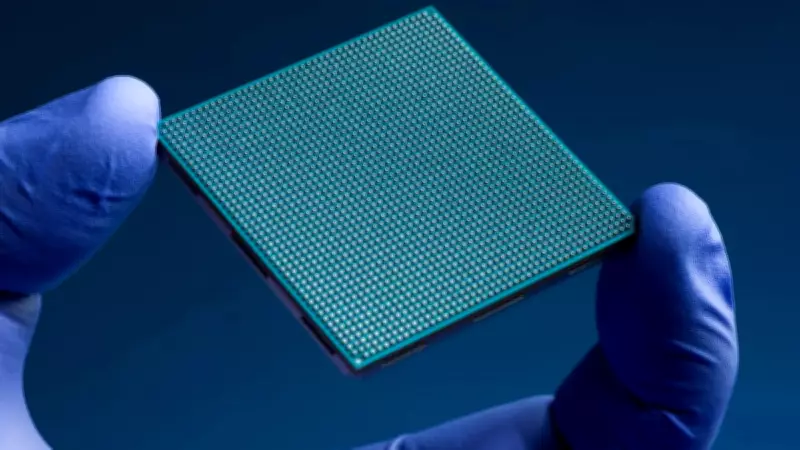
NASA has unveiled a groundbreaking new space processor that promises to deliver 500 times faster performance compared to current systems, significantly enhancing the agency's capabilities for future Moon and Mars missions. The advanced chip, developed over several years, is designed to withstand the harsh conditions of space while providing unprecedented computational power.
Revolutionizing Space Computing
The new processor, known as the High-Performance Spaceflight Computing (HPSC) chip, represents a major leap forward in space technology. It is built to handle complex tasks such as real-time data analysis, autonomous navigation, and advanced imaging, which are critical for deep space exploration. According to NASA officials, the HPSC chip can process data up to 500 times faster than current space-grade processors, enabling more efficient mission operations.
Key Features and Benefits
The HPSC chip offers several key features that make it ideal for future missions. It is radiation-hardened, meaning it can resist the damaging effects of cosmic radiation, and it operates efficiently in extreme temperatures. Additionally, the chip's architecture allows for scalability, making it suitable for a wide range of applications from small satellites to large rovers. This increased processing power will allow spacecraft to make decisions independently, reducing the need for constant communication with Earth.

Impact on Moon and Mars Missions
For upcoming lunar missions under the Artemis program, the HPSC chip will enable more sophisticated landings, real-time hazard avoidance, and enhanced scientific data collection. On Mars, the processor could support advanced rovers and potential human habitats, handling everything from life support systems to autonomous exploration. NASA engineers believe this technology is a game-changer for deep space exploration.
Development and Testing
The HPSC chip was developed in collaboration with industry partners and has undergone rigorous testing to ensure reliability. It has been validated in simulated space environments and is now ready for integration into future spacecraft. NASA plans to deploy the processor in several upcoming missions, including the Artemis III lunar landing and the Mars Sample Return campaign.
Future Applications
Beyond Moon and Mars missions, the HPSC chip has potential applications in other areas of space exploration, such as asteroid mining, space telescopes, and interplanetary communications. Its high performance and low power consumption make it a versatile tool for a new era of space discovery. NASA continues to innovate, pushing the boundaries of what is possible in space technology.