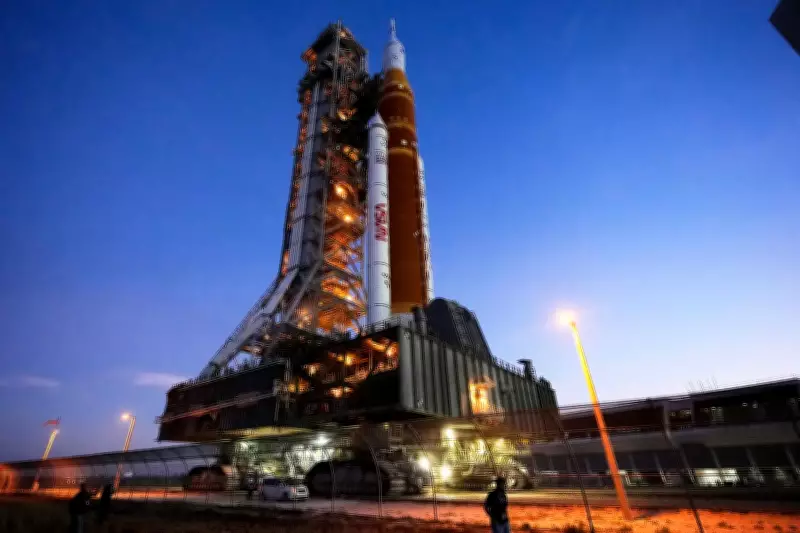
NASA Announces Updated Launch Schedule for Historic Artemis II Moon Mission
In a significant development for space exploration, NASA has officially unveiled an updated launch schedule for its highly anticipated Artemis II mission. Senior agency officials confirmed during a news conference that the mission remains "on track" for a lift-off as early as April 1.
Launch Window Details and Mission Readiness
"We are on track for a launch as early as April 1, and we are working toward that date. It's a test flight, and it is not without risk, but our team and our hardware are ready," stated Lori Glaze, a senior NASA official, during the briefing. The agency has identified up to four launch opportunities within a six-day period, with the first window opening precisely at 6:24 pm Eastern Time (10:24 pm GMT) on April 1.
This announcement follows an initial delay from the original February launch target, which NASA attributed to technical difficulties. The revised timeline includes additional testing procedures ahead of future lunar landing missions, ensuring comprehensive preparation for this historic endeavor.

Mission Profile and Crew Composition
Artemis II represents the first crewed flyby mission to the Moon in more than 50 years, carrying a diverse international crew of four astronauts:
- Mission Commander Reid Wiseman (United States)
- Victor Glover (United States)
- Christina Koch (United States)
- Jeremy Hansen (Canada)
According to NASA mission diagrams, Artemis II will follow a carefully orchestrated flight path:
- Initial Earth orbit after launch
- Departure for lunar flyby trajectory
- Circumnavigation of the Moon without landing
- Return to Earth for ocean splashdown
Historical Significance and Future Missions
While the uncrewed Artemis I mission passed approximately 80 miles above the lunar surface, NASA emphasizes that Artemis II will approach "tens of thousands of miles closer than any human has been in more than 50 years." This proximity represents a crucial step in humanity's return to lunar exploration.
The Artemis program continues with ambitious future missions:
- Artemis III: Targeting a rendezvous in low-Earth orbit with at least one lunar lander
- Artemis IV: Aiming for an actual lunar landing in early 2028
These subsequent missions work toward fulfilling the vision of returning Americans to the Moon, a priority established during the previous administration and continuing under current space exploration initiatives. The Artemis program represents humanity's most substantial lunar exploration effort since the Apollo era, combining international cooperation with cutting-edge space technology.