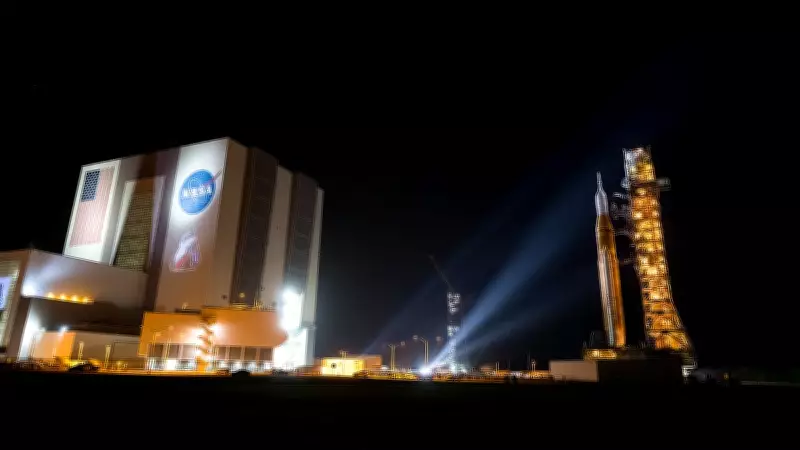
NASA Unveils SLS Rocket for Historic Artemis II Crewed Moon Mission
In a landmark move for space exploration, NASA has officially rolled out the powerful Space Launch System (SLS) rocket at Kennedy Space Center in Florida, setting the stage for the Artemis II mission. This event marks a critical step toward the first crewed journey to the Moon since the Apollo 17 mission in 1972, reigniting humanity's ambitions for lunar exploration and beyond.
Preparing for a New Era of Lunar Exploration
The rollout of the SLS rocket, a colossal vehicle standing over 322 feet tall, involved transporting it from the Vehicle Assembly Building to Launch Pad 39B. This process, which took approximately 10 hours, is a key milestone in the pre-launch preparations. The Artemis II mission is designed as a crewed test flight that will orbit the Moon without landing, serving as a crucial demonstration of the rocket's capabilities and the Orion spacecraft's systems in deep space.
Artemis II is scheduled to launch no earlier than September 2025, following extensive testing and safety checks. The mission will carry four astronauts—three from NASA and one from the Canadian Space Agency—on a journey around the Moon, testing life support, communication, and navigation systems in the harsh environment of space. This flight is a precursor to Artemis III, which aims to land astronauts on the lunar surface, including the first woman and the first person of color.

Technological Advancements and Global Collaboration
The SLS rocket represents a significant technological leap, being the most powerful rocket ever built, capable of generating over 8.8 million pounds of thrust at liftoff. It is engineered to carry heavy payloads and support long-duration missions, essential for establishing a sustainable human presence on the Moon. The Orion spacecraft, which will house the crew, is equipped with advanced avionics and radiation protection to ensure astronaut safety during the multi-week journey.
This mission underscores NASA's commitment to international partnerships, with contributions from agencies like the European Space Agency, which provided the service module for Orion. The Artemis program aims not only to return humans to the Moon but also to pave the way for future missions to Mars, fostering scientific discovery and technological innovation.
Implications for Future Space Endeavors
The success of Artemis II could have far-reaching implications for space exploration. By validating the SLS and Orion systems, NASA will gather vital data to enhance safety and efficiency for subsequent missions. This effort aligns with broader goals of exploring lunar resources, such as water ice at the Moon's south pole, which could support long-term habitation and fuel production.
As NASA eyes this historic crewed mission, the rollout signals a renewed focus on lunar exploration after decades of hiatus. The Artemis program, with its emphasis on sustainability and international cooperation, is poised to inspire a new generation of scientists, engineers, and space enthusiasts worldwide.