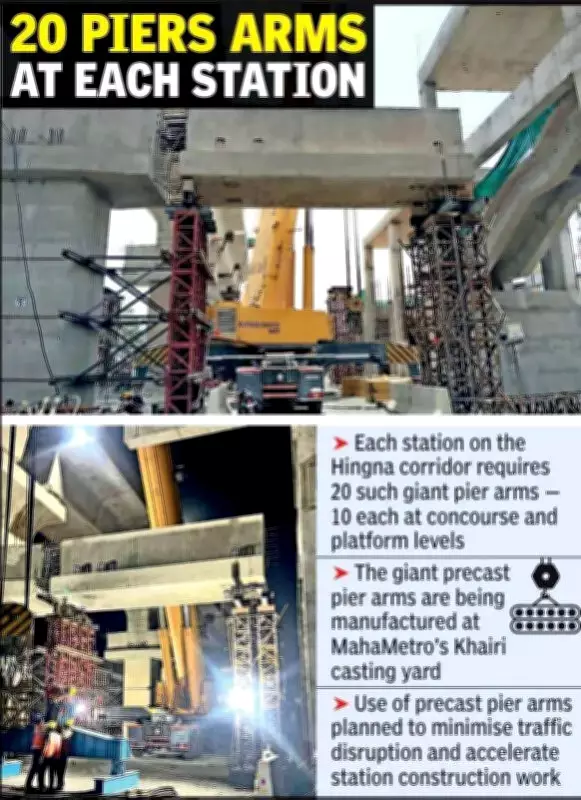
In a massive engineering and logistics operation currently unfolding in Nagpur, MahaMetro has begun transporting gigantic 120-tonne precast pier arms across a 52-kilometer stretch for the construction of a single Metro station on the Reach-3A (Hingna) corridor. Each pier arm weighs nearly as much as three empty Boeing 737 aircraft. Every station on the corridor requires 20 such giant pier arms—10 each at the concourse and platform levels—while a total of 140 pier arms will be installed across seven stations.
First Lifting Operation at Hingna Mount View Station
The first lifting operation commenced late Saturday night and continued until Sunday morning at the proposed Hingna Mount View Metro station on the 6.4-kilometer-long Reach-3A section between Lokmanya Nagar and Hingna. At the station location, the 120-tonne structures are lifted using an 800-metric-ton crane and placed on either side of the central pier. The structures are later connected through stitch concrete and post-tensioning methods to form the station framework. The use of precast pier arms has been planned to minimize traffic disruption and accelerate station construction work in dense urban stretches.
Manufacturing and Transport Process
The giant precast pier arms are being manufactured at MahaMetro's Khairi casting yard, where each arm undergoes a seven-day casting cycle involving reinforcement work, placement of post-tensioning ducts, casting, and de-shuttering. Once ready, the structures are loaded onto specially designed super-heavy hauler trailers attached to puller vehicles before beginning their 52-kilometer journey to station sites. Sources said the massive concrete structures are being transported primarily through the Outer Ring Road corridor at a maximum speed of 10 kilometers per hour, while most of the lifting and installation work is carried out during night hours to minimize traffic disruption.

Key Engineering Features and Progress
The Reach-3A section also includes a special 120-meter span over the Vena river in Hingna, one of the major engineering features of the project. Sources stated that nearly 50 percent of the viaduct work on the corridor has already been completed, while civil works are targeted for completion by December 2027. The corridor is expected to improve connectivity to educational institutions, hospitals, and residential areas.