Orbital Paradigm's KID Capsule Defies Odds, Sends Data After PSLV Failure
Orbital Paradigm announced on Tuesday that its Kestrel Initial Technology Demonstrator capsule transmitted valuable data despite the PSLV-C62 mission's failure. The company confirmed the KID capsule successfully separated from the launch vehicle and operated for more than three minutes.
Capsule Performance Against All Expectations
The firm revealed exciting details about the capsule's performance. "Our KID capsule, against all odds, separated from PSLV-C62, switched on, and transmitted data over 3+ minutes," the company stated. Engineers are currently reconstructing the trajectory using this information.
Remarkably, the capsule survived extreme conditions during its brief flight. It withstood peak heat and recorded g-loads reaching approximately 28g. Orbital Paradigm promised a comprehensive report will follow their analysis.

ISRO's Parallel Investigation
The Indian Space Research Organisation has simultaneously begun examining data collected before the mission encountered problems. The issue occurred during the third stage operation of the Polar Satellite Launch Vehicle.
ISRO Chairman V Narayanan explained the technical difficulties observed during Monday's launch. "Close to the end of the third stage we saw little more disturbance in the vehicle roll rates and subsequently there was a deviation in the flight path," he stated. The space agency continues analyzing this data to determine the exact cause.
Mission Details and Payloads
The PSLV-C62 mission carried multiple important payloads beyond Orbital Paradigm's technology demonstrator:
- India's strategic satellite Anvesha (EOS-N1) developed by DRDO
- Nepal's Munal satellite facilitated through the Ministry of External Affairs
- OrbitAID's AyulSat technology demonstrator for on-orbit refuelling research
- Twelve additional payloads
Launch Sequence and Failure
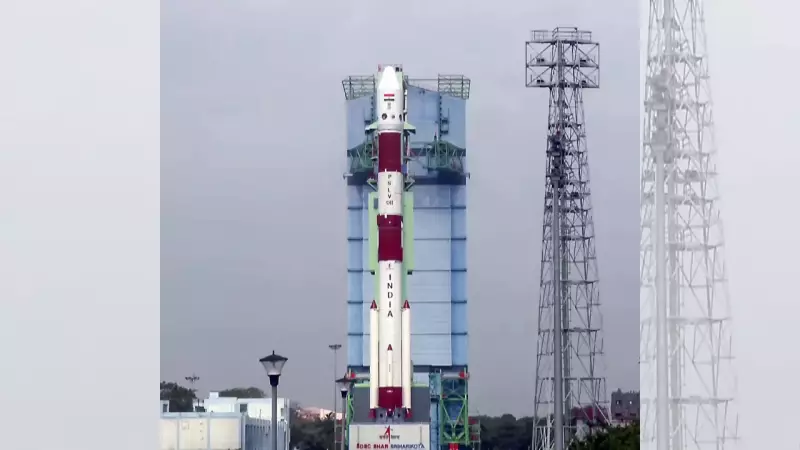
The 44.4-meter tall PSLV lifted off from SDSC's first launch pad at 10:18 AM on Monday. The launch occurred approximately ninety seconds later than originally scheduled.
Mission control encountered problems about eight minutes and forty seconds after liftoff. The third stage shut down as planned, but the fourth stage ignition faced issues. Command signals were sent, but controllers received no confirmation of successful ignition.
The atmosphere in mission control grew tense as engineers monitored the situation. Narayanan eventually announced the mission had failed to achieve its objectives.
Historical Context of PSLV Setbacks
This failure marks the second consecutive setback for the PSLV program within nine months. On May 18, 2025, PSLV-C61 experienced a third-stage anomaly that prevented the EOS-09 strategic satellite from reaching orbit.
These back-to-back failures represent an unprecedented situation for India's reliable workhorse rocket. The PSLV has never previously experienced consecutive mission failures. Additionally, the same rocket stage has not faltered multiple times until these recent incidents.
Space industry observers note these developments with concern while acknowledging ISRO's strong track record of identifying and resolving technical challenges.