Kawasaki Heavy Industries Launches Development of Revolutionary Four-Legged Mobility Vehicle
Kawasaki Heavy Industries has officially commenced formal development work on CORLEO, an innovative four-legged off-road personal mobility vehicle that made its first public appearance at the Japan World Expo 2025 in Osaka. The company is approaching this ambitious project as a long-term endeavor, with a practical demonstration scheduled for Expo 2030 in Riyadh and commercial release anticipated around 2035.
Dedicated Team and Strategic Vision
To oversee this groundbreaking initiative, Kawasaki has established a specialized internal unit named the SAFE ADVENTURE Business Development Team. This team reports directly to the company's president and will be responsible for all aspects of development, testing, and exploring potential real-world applications for CORLEO. Currently, Kawasaki positions the vehicle as a mobility solution for large outdoor spaces rather than a mass-market product.
Advanced Simulator and Future Applications
In parallel with the vehicle's development, Kawasaki is constructing a sophisticated riding simulator designed to replicate the experience of operating CORLEO. Expected to be completed by 2027, this simulator will utilize motion data, 3D environments, and control behavior collected during the development phase. Interestingly, Kawasaki suggests the simulator could have applications beyond research, potentially extending into gaming and e-sports, though specific implementation details remain undefined.

Innovative Design and Engineering
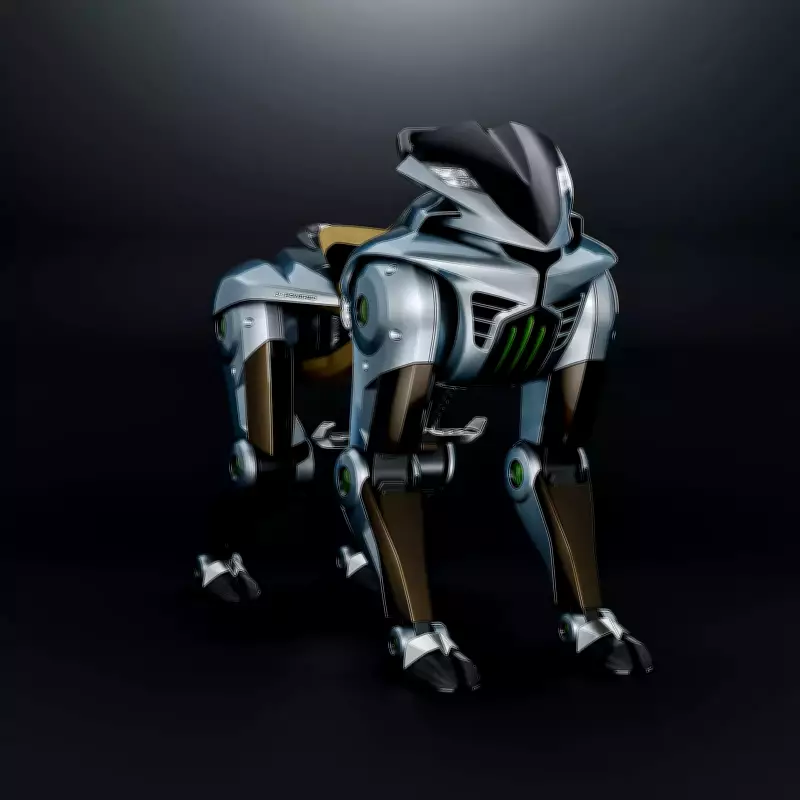
CORLEO represents a novel fusion of robotics and motorcycle engineering, creating a new category of personal mobility. Unlike traditional vehicles, it eschews wheels entirely, instead utilizing four robotic legs specifically engineered to navigate uneven and unstable terrain. According to Kawasaki, this design enables movement across challenging surfaces such as grass, rocks, and rubble that would be problematic for conventional off-road vehicles.
Enhanced Stability and Control Features
The vehicle features independent rear leg movement, inspired by motorcycle swingarms, which allows the rear legs to operate separately from the front pair. This configuration aims to absorb impacts during traversal of rough ground and helps maintain a level rider posture when climbing steps or steep inclines, improving visibility and terrain assessment.
Control is achieved through intuitive weight-shift mechanisms, where sensors in the steps and handlebars detect body movements and translate them into motion, akin to horseback riding. Additional support functions assist with balance on difficult surfaces, and riders can customize stirrup length for optimal posture.
Specialized Components and Power System
Each leg terminates in a split rubber hoof designed to adapt to minor surface variations and provide reliable grip across diverse terrains, reducing slip risks. Power is supplied by a 150cc hydrogen engine, which generates electricity to drive motors in each leg, rather than providing direct propulsion. Hydrogen is stored in a rear-mounted canister, aligning with Kawasaki's broader interest in hydrogen as an alternative energy source.
Navigation and Display Systems
The onboard display provides critical information including hydrogen levels, route guidance, and center of gravity data. For nighttime operation, the system can project path markers onto the ground to guide the rider.
CORLEO debuted at the "Future Life Expo: Future City" exhibit during Expo 2025 Osaka, where it garnered approximately 1.2 billion social media impressions. Kawasaki describes the project as a culmination of its expertise in robotics and motorcycles, serving as a testbed for future outdoor mobility solutions.