Japan's Pioneering Wooden Satellite Completes Historic Space Mission
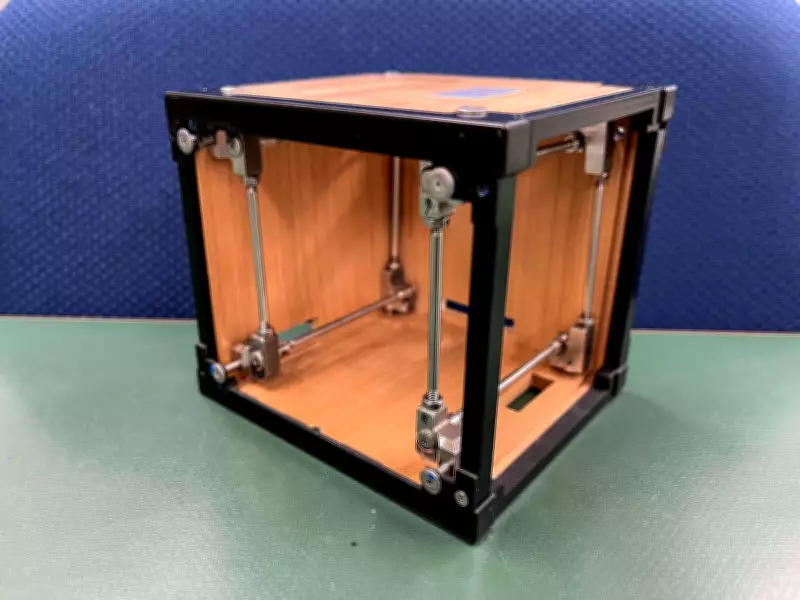
In a groundbreaking development for space technology, wood has entered low Earth orbit in an unprecedented form. The LignoSat project, a small satellite constructed primarily from magnolia timber, has successfully completed its experimental mission, marking a significant step toward sustainable spacecraft design.
The LignoSat Mission: Details and Deployment
In December 2024, five CubeSats were released from the International Space Station, including the innovative LignoSat. This remarkable satellite remained in orbit for 116 days following its deployment, providing valuable data about wood's behavior in the harsh environment of space. The mission represents a collaborative effort between the Japan Aerospace Exploration Agency (JAXA), Kyoto University, and Sumitomo Forestry.
LignoSat is a CubeSat approximately the size of a standard coffee mug. Its outer panels are crafted from honoki magnolia wood, which was selected after rigorous exposure tests conducted earlier on the International Space Station. Researchers evaluated three different wood species by placing them outside the station to observe their responses to vacuum conditions, radiation exposure, and extreme temperature fluctuations. Honoki magnolia demonstrated superior stability compared to the other tested materials.

Innovative Construction and Scientific Objectives
The satellite's construction employed traditional Japanese wood joinery techniques rather than conventional screws or adhesives. This approach allowed researchers to study how untreated timber would withstand the stresses of space without protective coatings. Inside the satellite, sophisticated sensors continuously monitored strain levels, internal temperature variations, and radiation effects throughout the mission.
Engineers were particularly interested in whether the geomagnetic field would penetrate the wooden structure and potentially interfere with onboard electronics. The practical nature of this experiment reflects a broader initiative to reconsider satellite materials and their environmental impact.
Addressing Environmental Concerns in Space Technology
The environmental implications of satellite technology form a crucial aspect of the LignoSat project's appeal. Conventional satellites are predominantly constructed from aluminium, which poses environmental concerns during reentry. When aluminium-based satellites burn up upon returning to Earth's atmosphere, they release aluminium oxide particles into the upper atmosphere. Scientists continue to investigate how long these particles persist and what effects they may have on atmospheric conditions.
Wood presents a fundamentally different alternative. As a renewable material, wood produces significantly less metallic residue when it burns. Researchers hope that biodegradable materials like wood could help limit long-term atmospheric accumulation as satellite launches continue to increase globally. The deployment of LignoSat from the International Space Station received support from NASA, underscoring the international interest in sustainable space technology.
Future Developments and Mission Expansion
According to the Nanosats Database, the LignoSat mission is planned to continue through 2027. A second mission, designated LignoSat 2, is expected to launch in 2027. Engineers will carefully analyze the data collected from the initial mission before making adjustments to the satellite's design for subsequent iterations.
While the current mission represents a modest test case, it signals a profound shift in thinking about spacecraft design and materials. The successful deployment and operation of a wooden satellite in orbit demonstrates that alternative, environmentally conscious materials can withstand the rigors of space exploration.
This pioneering experiment has opened new possibilities for sustainable space technology, with timber quietly circling Earth and transmitting valuable scientific data back to researchers. The LignoSat project stands as a testament to innovative thinking in addressing both technological challenges and environmental concerns in the rapidly expanding field of space exploration.