

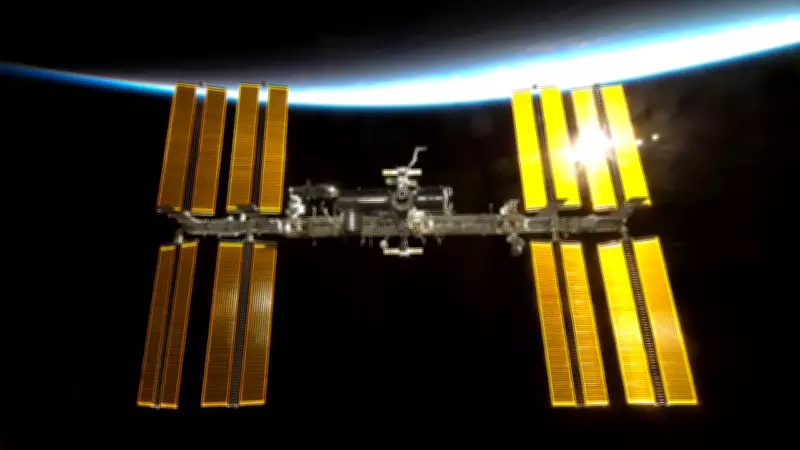
ISS Cargo Mission Faces Technical Glitch, Requires Manual Docking Procedure
A Russian cargo spacecraft bound for the International Space Station (ISS) encountered a significant technical malfunction during its journey, forcing cosmonauts to implement a manual docking procedure. The Progress MS-33 spacecraft, launched to deliver essential supplies, experienced issues with its automated docking system shortly after reaching orbit.
Automated System Failure Triggers Backup Protocol
The problem originated when the Progress MS-33 cargo ship launched aboard a Soyuz 2.1a rocket from Kazakhstan's Baikonur Cosmodrome. Mission engineers quickly detected a malfunction with one of the KURS automated docking system antennas aboard the spacecraft. According to NASA reports, the antenna failed to deploy properly, rendering the standard automated docking system inoperable.
The KURS system represents Russia's primary automated docking technology for ISS missions, making this malfunction particularly noteworthy. Without this critical system functioning at full capacity, mission controllers had to activate contingency plans.

Experienced Cosmonauts Take Manual Control
With the automated system compromised, ISS commander Sergei Kud-Sverchkov was assigned to execute a manual docking procedure using the TORU (Teleoperator Control Mode) backup system. This system enables cosmonauts to manually guide spacecraft to dock with the station from inside the ISS.
"Manual approach procedures are regularly practiced by cosmonauts in training," explained Oleg Kononenko, head of Russia's Cosmonaut Training Center. This incident demonstrates how routine training prepares space crews for unexpected technical challenges.
Critical Cargo Delivery Continues Despite Challenges
Despite the docking system issue, the Progress MS-33 spacecraft continued its journey to the ISS with all other systems functioning normally. The cargo ship carries approximately 2.5 tonnes of vital supplies for the station's crew, including:
- Food provisions and drinking water supplies
- Fuel for necessary station maneuvers and adjustments
- Oxygen and essential life support equipment
- General maintenance supplies and operational equipment
These materials are crucial for sustaining daily operations and crew wellbeing aboard the orbiting laboratory.
Space Mission Redundancy Proves Its Value
This incident highlights several important aspects of contemporary space exploration. First, it demonstrates the critical importance of redundancy in space systems. The availability of both automated and manual docking options ensured mission continuity despite technical failures.
Second, the event underscores how human skills and training remain indispensable even in an era of advanced automation. The cosmonauts' ability to seamlessly transition from automated to manual operations prevented what could have been a mission-critical failure.
The TORU backup system, developed and refined over decades of Russian space experience, proved its worth in this situation. This incident serves as a reminder that while technology continues to advance, human expertise and well-designed backup systems remain essential components of successful space missions.
Broader Implications for Space Operations
Space agencies worldwide will likely examine this incident for lessons about system reliability and crew training. The quick identification of the antenna problem and the subsequent implementation of manual procedures demonstrate effective crisis management protocols.
This event also illustrates how international cooperation on the ISS creates resilient operational frameworks. The seamless coordination between Russian mission controllers and NASA during this incident reflects the collaborative nature of modern space exploration.
As space missions become more complex and ambitious, incidents like this provide valuable data for improving future spacecraft designs and operational procedures. The successful resolution of this docking challenge through manual intervention reinforces the importance of maintaining human oversight in increasingly automated space systems.






