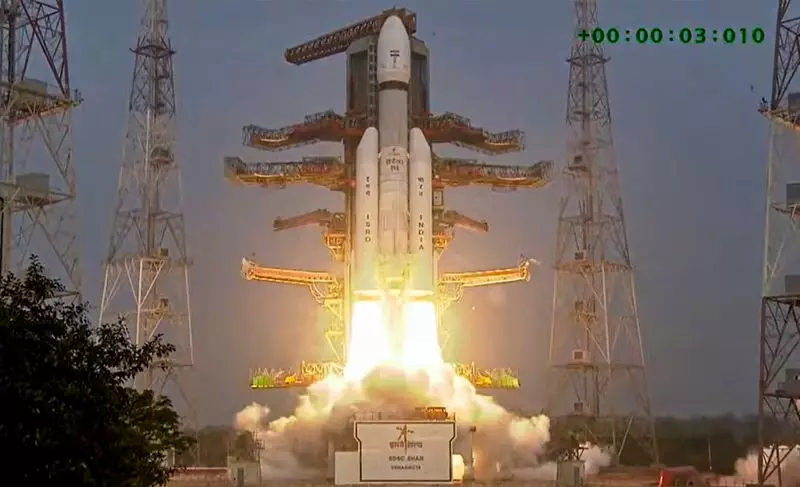
The Indian Space Research Organisation (ISRO) has set an ambitious target to commission a third launch pad at its primary spaceport, the Satish Dhawan Space Centre (SDSC) in Sriharikota, within the next four years. This major infrastructure expansion is aimed at significantly boosting India's launch capacity and supporting future missions, including those involving a new, heavier launch vehicle.
A Strategic Expansion for Future Missions
The revelation was made by a senior ISRO scientist involved in the planning. The new facility is not just an addition but a necessity to keep pace with the organization's growing launch manifest and the development of next-generation launch systems. The existing two launch pads at SDSC have been workhorses for missions ranging from the Polar Satellite Launch Vehicle (PSLV) to the more powerful Geosynchronous Satellite Launch Vehicle (GSLV) and the Launch Vehicle Mark-III (LVM3).
The driving force behind this new project is the development of the Next Generation Launch Vehicle (NGLV), a much more powerful rocket conceptualized to carry heavier payloads. This new vehicle will require dedicated ground infrastructure tailored to its size and complexity. The third launch pad is being designed specifically to accommodate the NGLV and similar advanced launch systems of the future, ensuring Sriharikota remains the cornerstone of India's space ambitions for decades to come.

Enhancing Launch Frequency and Reliability
Beyond supporting new rockets, the additional launch pad will provide critical operational flexibility. With two active pads currently, mission scheduling can face constraints during periods of high launch frequency or if a pad requires extended maintenance or refurbishment after a launch. A third pad will allow ISRO to streamline its launch cadence, potentially enabling a quicker turnaround between missions.
This is crucial for commercial satellite launches, human spaceflight missions under the Gaganyaan program, and deep-space exploration plans. It also enhances the resilience of India's space infrastructure, ensuring that the country's access to space is not hindered by unforeseen issues at a single launch complex. The scientist indicated that the detailed project report is in its final stages, and construction is expected to commence soon after receiving the necessary approvals.
A Four-Year Timeline for a National Asset
The four-year timeline for commissioning the pad is aggressive, considering the scale and technical sophistication of such infrastructure. Building a launch pad involves massive earthworks, constructing robust flame deflectors and service structures, and installing intricate fuel, power, and data systems that must meet extreme safety and reliability standards.
Once operational by 2028, the third launch pad will transform Sriharikota into one of the most versatile and busy spaceports in the world. It will solidify India's position in the global commercial launch market and provide the necessary backbone for the nation's most ambitious scientific and exploratory missions. This expansion is a clear signal of ISRO's confidence in its future launch vehicle roadmap and its commitment to maintaining robust, self-reliant access to space.