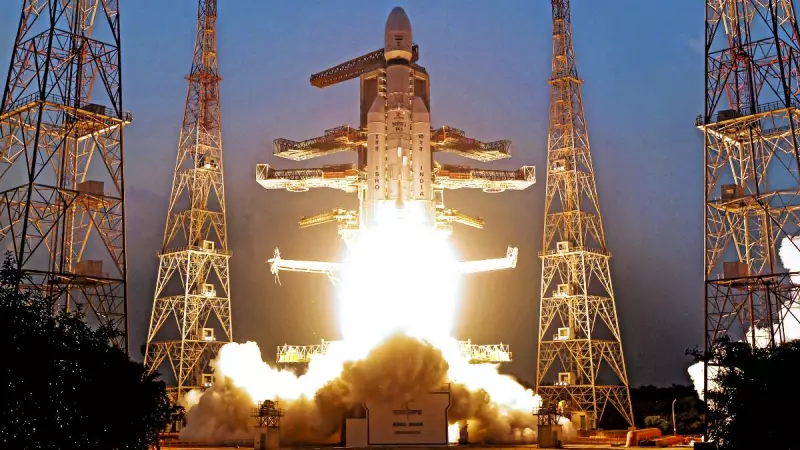
In a significant move to bolster its orbital launch capabilities, the Indian Space Research Organisation (ISRO) is constructing a third launch pad at its Satish Dhawan Space Centre (SDSC) in Sriharikota. This new infrastructure is strategically designed to handle the demands of future heavy-lift missions, including the ambitious Gaganyaan human spaceflight program and modules for the proposed Indian space station.
A Strategic Expansion for Ambitious Goals
The decision to build a new launch complex is driven by ISRO's expanding portfolio of missions that require greater payload capacity and enhanced infrastructure. The existing two launch pads at SDSC have served the nation remarkably well, supporting missions from the reliable PSLV to the more powerful GSLV and LVM3 rockets. However, the vision for the future involves even larger spacecraft and more complex launches.
The third launch pad is specifically being developed to accommodate the next generation of heavy-lift launch vehicles. These rockets are crucial for launching the heavier modules of the planned Indian space station, 'Bharatiya Antariksha Station', and for future deep space missions. The facility will be equipped with advanced integration and checkout systems to ensure the highest standards of safety and reliability, especially for human-rated missions like Gaganyaan.

Timeline and Technical Imperatives
The project is on a fast track, with a targeted completion date set for the end of 2025. This timeline underscores the urgency and importance ISRO places on having this critical infrastructure ready to support its upcoming flagship projects. The new pad will not only provide redundancy, allowing for a higher launch frequency, but will also incorporate lessons learned from decades of launch operations.
Technically, the pad will be engineered to support rockets with significantly higher thrust and payload capacity than current operational vehicles. It will feature strengthened flame deflectors, enhanced cryogenic fuel storage and handling facilities, and robust safety measures to protect both the vehicle and ground crew. This infrastructure is essential for missions that go beyond Earth orbit and for deploying large satellites into geostationary orbit.
Catalyst for Gaganyaan and Beyond
The immediate and most prominent beneficiary of this new launch pad will be the Gaganyaan program. India's first human spaceflight mission demands unparalleled levels of safety and precision. A dedicated, state-of-the-art launch complex minimizes risks and streamlines operations for such historic endeavors. It will serve as the primary launch site for the crewed missions and the extensive series of uncrewed test flights that will precede them.
Looking further ahead, this expansion solidifies Sriharikota's position as a premier global spaceport. It opens doors for:
- Commercial heavy-lift launch services for international clients.
- Collaborative interplanetary missions with other space agencies.
- The sustained assembly and servicing of the Indian space station.
The construction of the third launch pad is more than just an infrastructure project; it is a clear statement of intent. It demonstrates India's commitment to securing a leading role in the new space era, characterized by human spaceflight, sustained orbital presence, and heavy-lift capability. This strategic investment by ISRO ensures that the country's space program has the foundational strength to turn its most ambitious celestial blueprints into reality.