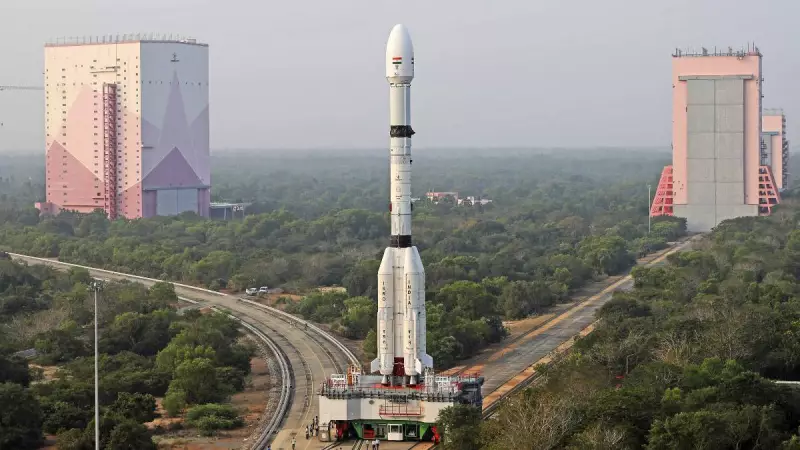
In a rare event for India's space program, the Indian Space Research Organisation (ISRO) recently encountered a setback with its PSLV-C62 mission. While the agency is globally renowned for its high success rate and cost-effective missions, this incident brings into focus the occasional challenges inherent in the complex domain of space exploration.
Understanding the PSLV-C62 Mission Anomaly
The PSLV-C62 mission, launched on a date specified in the source, aimed to deploy its payload into a precise orbit. However, the mission did not achieve its full objectives as planned. According to reports, an anomaly during a later stage of the flight led to the satellites being placed in a sub-optimal orbit. This means that while the launch vehicle performed nominally for the initial phases, a technical issue prevented the final, crucial step of accurately deploying the spacecraft.
ISRO's scientists and engineers are conducting a detailed Failure Analysis Committee (FAC) investigation to pinpoint the exact root cause. Preliminary analyses suggest a potential issue with the mission's upper stage, which is responsible for the final orbital adjustments. The agency has a robust protocol for such reviews, ensuring that lessons learned are incorporated into future missions to enhance reliability.

A Historical Perspective on ISRO's Launch Record
To fully appreciate the context of the PSLV-C62 event, it is essential to look at ISRO's historical track record. The Polar Satellite Launch Vehicle (PSLV) is often called the 'workhorse' of ISRO, boasting an impressive success rate of over 95% across more than 50 missions. Its first failure occurred in its maiden flight in 1993, but it was followed by a long string of consecutive successes that built global confidence.
Other launch vehicles in ISRO's fleet have also faced isolated challenges. The Geosynchronous Satellite Launch Vehicle (GSLV), dealing with the more complex cryogenic technology, experienced a few failures in its developmental phases. Notably, the GSLV-D3 mission in 2010 failed due to the non-ignition of the indigenous cryogenic upper stage. Similarly, the GSLV-F06 in 2010 saw a failure attributed to a structural issue in the vehicle's strap-on stage.
Each of these setbacks was met with rigorous investigation and technological refinement. The learning from the GSLV program's early struggles eventually led to the successful development of the powerful GSLV Mk III, now called the Launch Vehicle Mark-3 (LVM3), which has a flawless record and is central to India's human spaceflight ambitions, Gaganyaan.
The Path Forward: Resilience and Continuous Improvement
The true measure of a space agency's capability is not the absence of failure, but its response to it. ISRO has consistently demonstrated remarkable resilience and a culture of transparency following anomalies. The data from the PSLV-C62 investigation will be invaluable. It will feed into design improvements, quality control enhancements, and simulation upgrades, making future missions even more robust.
This incident also underscores the inherent risks of spaceflight. Even with decades of experience and advanced technology, the extreme environments and precision required leave little margin for error. However, ISRO's overall record remains stellar. From the Chandrayaan and Mangalyaan missions to deploying hundreds of satellites for India and the world, its achievements far outweigh its rare stumbles.
For the global space community and the Indian public, the PSLV-C62 event is a reminder that space is a hard frontier. Yet, it also reinforces confidence in ISRO's systematic engineering approach to overcome these hurdles, ensuring the agency continues to be a leading and reliable player in the international space arena.