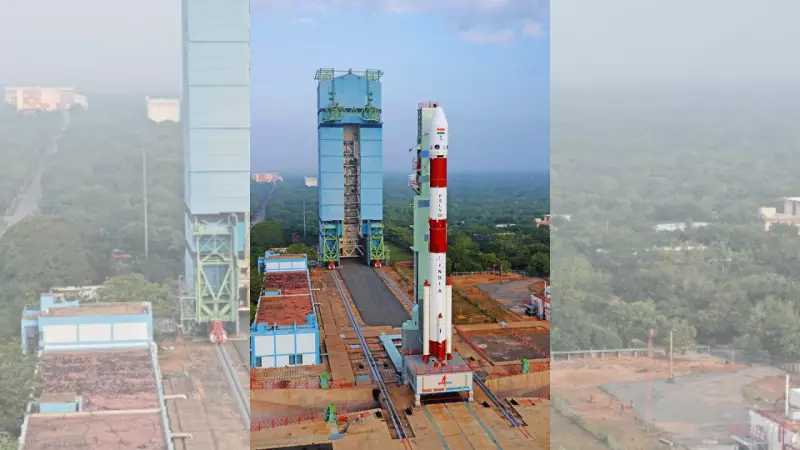
India's space agency, ISRO, is set to begin its 2026 launch campaign with a significant multi-payload mission that underscores the nation's growing strategic and commercial space ambitions. The PSLV-C62 mission is scheduled for liftoff at 10:17 am on January 12 from the First Launch Pad at the Satish Dhawan Space Centre in Sriharikota.
A Trio of Strategic Payloads
The primary passenger for this flight is DRDO's Anvesha satellite, also designated EOS-N1. This defence spacecraft is engineered to deliver a major surveillance edge to the Indian military. Its hyperspectral imaging payload can dissect light across hundreds of wavelengths, enabling it to identify the material composition of objects—a capability far surpassing traditional observation methods.
A second key payload is AayulSAT, developed by Bengaluru-based startup OrbitAID Aerospace. This satellite represents India's first concrete step towards mastering on-orbit refuelling technology—a game-changer for extending satellite lifespans and enabling complex space logistics. OrbitAID's founder, Sakthikumar Ramachandran, calls it the "foundation of the on-orbit economy."

The third notable satellite is Munal, built by Nepal's Antharkshya Pratishtan with support from India's Ministry of External Affairs (MEA). Carrying an Earth observation payload, it aims to aid environmental monitoring and marks a pivotal moment in Nepal's journey into space-based applications, facilitated by Indian collaboration.
A Constellation of Supporting Satellites
Beyond these three, the PSLV-C62 will deploy an additional 13 satellites into orbit. Indian startup Dhruva Space is contributing five satellites: CGUSAT, DSUSAT, MOI-1, LACHIT, and DR-1. These will demonstrate a range of indigenous technologies, from satellite bus capabilities and communication subsystems to the performance of larger CubeSat platforms.
The mission also has a strong international flavour, hosting satellites from allied nations. The foreign manifest includes five satellites from Brazil's AlltoSpace (EduSat, Uaisat, Galaxy Explorer, Orbital Temple, and Aldebaran-1), the Theos-2 satellite from SSTL in the UK, and the KID Capsule by RIDE of France. Rounding out the list is Sanskarsat, a CubeSat by India's Laxman Gyanpith. All commercial arrangements were handled by NewSpace India Limited (NSIL), ISRO's commercial arm.
Significance and Future Implications
This launch is a microcosm of India's modern space strategy: blending crucial defence needs with diplomatic outreach, fostering private sector innovation, and securing international commercial partnerships. The success of AayulSAT's refuelling technology test could position India as a key player in the emerging in-space servicing market. Simultaneously, the launch of Nepal's satellite strengthens regional ties under India's 'Neighbourhood First' policy.
The January 12 mission thus sets a powerful precedent for 2026, showcasing ISRO's role as a versatile launch service provider and a catalyst for strategic technological advancement.