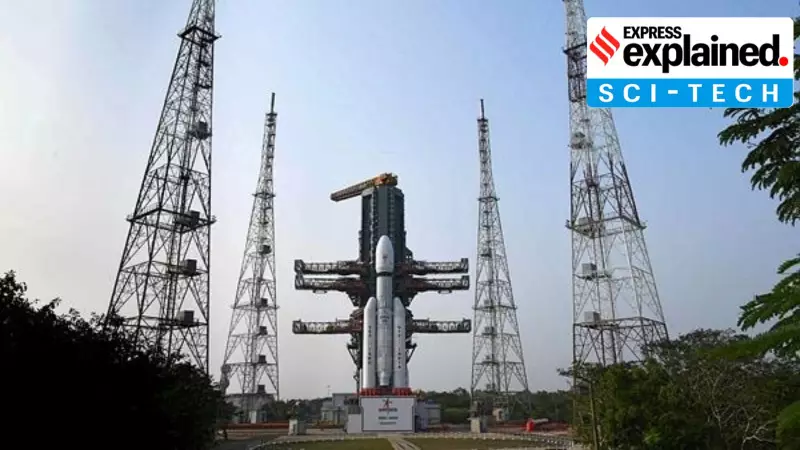
In a landmark event for India's space ambitions, the Indian Space Research Organisation (ISRO) is poised to launch its heaviest-ever satellite into orbit. The LVM3-M6 mission is scheduled for a lift-off at 8:24 am on Wednesday, December 24, 2025, from the Satish Dhawan Space Centre in Sriharikota.
A Record-Breaking Payload for Global Connectivity
The primary passenger for this historic flight is the BlueBird Block-2 spacecraft, a colossal satellite weighing approximately 6,100 kilograms. This mass makes it the single heaviest payload ISRO has ever attempted to place in orbit, surpassing the previous record set by batches of OneWeb satellites. The satellite is designed by the US-based firm AST SpaceMobile and represents a significant leap in communication technology.
Unlike traditional satellites that rely on ground stations, BlueBird Block-2 is part of a pioneering Low Earth Orbit (LEO) constellation designed to provide direct-to-mobile connectivity. This system promises to enable 4G and 5G voice and video calls, text messaging, data streaming, and internet access directly to standard mobile phones, aiming to bridge connectivity gaps globally. The satellite will be injected into an orbit about 520 kilometers above Earth roughly 15 minutes after launch.

Why This Mission is a Crucial Test for ISRO
This launch is far more than a routine satellite deployment; it is a strategic demonstration of India's competitive edge in the global commercial launch market. The LVM3 (Launch Vehicle Mark-3), previously known as GSLV Mk-III, is ISRO's most powerful rocket, featuring a robust cryogenic engine stage.
The mission marks the third commercial launch for this vehicle, following the successful OneWeb satellite deployments in 2022 and 2023. ISRO secured these contracts in a shifting global landscape, where options like Russia's Soyuz became unavailable and ESA's Ariane-5 was retired. Now, competing directly with vehicles like SpaceX's Falcon-9 and ESA's new Ariane 6, ISRO aims to prove it can execute such heavy-lift missions reliably and at a lower cost.
Furthermore, the rapid turnaround is notable. This launch comes just weeks after the LVM3 launched the CMS-03 satellite on November 2, representing the shortest gap between two missions for this heavy-lift vehicle. It tests ISRO's ability to quickly assemble and launch its most complex missions, a capability vital for future commercial and human spaceflight programs.
Engineering the Future: Upgrades for Gaganyaan and Beyond
The LVM3 is not static; it is the cornerstone of India's future space endeavors. A modified version of this rocket is slated to carry astronauts in the ambitious Gaganyaan mission. To meet human-rating standards and increased demands, ISRO is actively working on significant upgrades.
Key among these is enhancing the rocket's lift capacity. Engineers are developing a new C32 cryogenic upper stage to replace the current C25 stage. The C32 will carry 32,000 kg of propellant (up from 28,000 kg) and generate 22 tonnes of thrust (up from 20 tonnes). This upgrade is critical for placing heavier modules of the planned Bharatiya Antariksh Station (Indian Space Station) into orbit.
Additionally, ISRO is planning to replace the liquid propellant in the rocket's second stage with a more powerful and cost-effective semi-cryogenic engine using refined kerosene and liquid oxygen. This change could boost the vehicle's payload capacity to Low Earth Orbit from the current 8,000 kg to around 10,000 kg. Another innovation in development is "bootstrap reignition" for the cryogenic engine, allowing it to restart in space without external help, making multi-orbit satellite deployments more efficient.
The LVM3-M6 mission is therefore a pivotal moment. It showcases India's growing prowess in the commercial satellite launch sector, tests the operational tempo of its premier rocket, and underscores the continuous technological evolution paving the way for the nation's crewed spaceflight and space station dreams.