Historic Breakthrough in Space Propulsion Technology
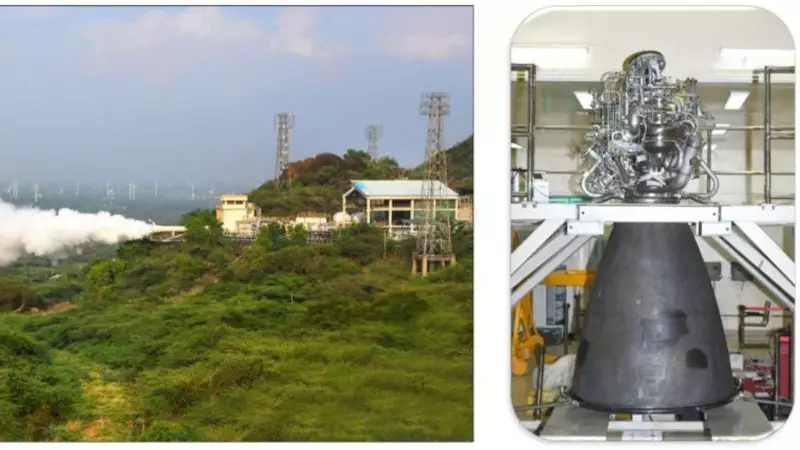
The Indian Space Research Organisation has achieved a remarkable global first in space propulsion technology by successfully testing the bootstrap mode start on its CE-20 cryogenic engine without requiring any auxiliary startup system. This groundbreaking test represents a significant milestone for India's ambitious Gaganyaan human spaceflight program and future space station initiatives.
Technical Details of the Landmark Test
The critical 10-second test was conducted on November 7 at ISRO's Propulsion Complex located in Mahendragiri, Tamil Nadu. According to the space agency's official statement, the test successfully demonstrated both the bootstrap mode buildup and steady-state operation of the engine, proving the system's capability to initiate and maintain operation independently.
What makes this achievement particularly noteworthy is the innovative approach employed during testing. Engineers utilized a multi-element igniter system in both the thrust chamber and gas generator to facilitate the bootstrap starting process. Following ignition of the thrust chamber, the gas generator was ignited under tank head conditions, and the turbo pumps were successfully started without relying on the conventional startup system.

Significance for India's Space Ambitions
This technological breakthrough holds immense importance for India's future space endeavors, particularly the Gaganyaan mission and the planned Bharatiya Antariksh Station (BAS). The capability for multi-orbital and multi-restart engine operations is essential for these advanced missions that require complex orbital maneuvers and multiple engine ignitions during a single flight.
The CE-20 cryogenic engine, which powers the upper stage of the Launch Vehicle Mark-3 (LVM3), had previously qualified for Gaganyaan missions with demonstrated capability to operate at thrust levels between 19 and 22 tonnes in flight with a single start. However, the newly demonstrated bootstrap mode capability represents a substantial enhancement to the engine's operational flexibility.
This advancement directly translates to improved payload capacity for large space vehicles since it eliminates the need for additional startup gas bottles and associated systems that traditionally reduce available payload space. The ability to restart engines during flight without external assistance means more efficient use of vehicle mass and volume for mission-critical payloads.
Technical Specifications and Future Applications
The LVM3 launch vehicle, powered by the CE-20 engine, represents India's heavy-lift capability with a total lift-off capacity of 4,000 tonnes. This three-stage vehicle comprises two solid strap-on motors capable of carrying up to 204 tonnes of solid propellant, one liquid core stage with twin engines carrying 115 tonnes of liquid propellant, and the high-thrust cryogenic upper stage carrying 28 tonnes of propellant.
Under normal operational conditions, engine ignition begins under tank head conditions, followed by the startup of turbopumps using a stored gas startup system. The newly demonstrated bootstrap mode eliminates this dependency, creating a more efficient and flexible propulsion system.
ISRO emphasized that future missions requiring multiple in-flight restarts of the CE-20 engine will benefit significantly from this development. The space agency noted that in the previous configuration, each restart demanded additional startup gas bottles and supporting systems, which inevitably reduced the vehicle's payload capability. The successful bootstrap mode test effectively addresses this limitation, paving the way for more ambitious multi-orbit missions with enhanced payload capacity.
This achievement positions India at the forefront of cryogenic engine technology and represents a crucial step forward in the nation's journey toward independent human spaceflight capabilities and the establishment of a permanent presence in space through the Bharatiya Antariksh Station.