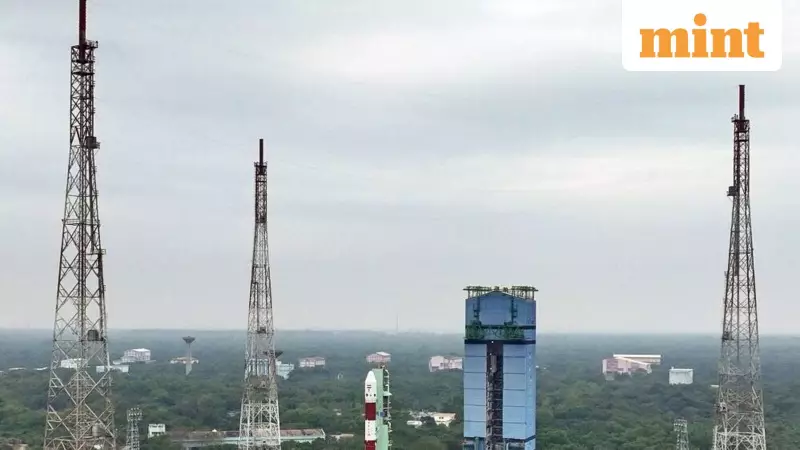
The Indian Space Research Organisation (ISRO) is poised to commence its 2026 space launch calendar with a significant mission. The PSLV-C62 / EOS-N1 Mission is scheduled for a morning lift-off on Monday, January 12, 2026.
Mission Timeline and Payload Details
The Polar Satellite Launch Vehicle (PSLV) will roar to life at 10:17 am IST from the First Launch Pad at the Satish Dhawan Space Centre in Sriharikota. This mission marks a notable moment as the 64th flight for the reliable PSLV workhorse, as confirmed by Jawaharlal Nehru Planetarium Director, BR Guruprasad.
The primary payload is the Earth Observation Satellite EOS-N1, named 'Anvesha'. It will be accompanied by 15 co-passenger satellites. The mission profile involves injecting Anvesha and 14 of the co-passengers into a Sun Synchronous Orbit. The final passenger, the KID capsule, will be placed on a re-entry trajectory.

Significance of the Anvesha Satellite and Co-Passengers
Anvesha is a crucial hyperspectral Earth-observation satellite developed by the Defence Research and Development Organisation (DRDO). Weighing between 100 and 150 kilograms, it is designed to operate from a low Earth orbit of approximately 600 kilometres. Its advanced capabilities are expected to provide India with significantly enhanced surveillance and terrain classification data.
The sequence of deployment is precise. Around 17 minutes after lift-off, the PSLV will first release the EOS-N1 satellite, which was built through a collaboration between Thailand and the United Kingdom. This will be followed by the 14 other co-passenger satellites into the sun-synchronous orbit. These satellites are part of a commercial undertaking by NewSpace India Ltd (NSIL), ISRO's commercial arm, serving both domestic and international customers.
KID Capsule Re-Entry Demonstration
A key technological demonstration of this mission involves the Kestrel Initial Technology Demonstrator (KID). Weighing about 25 kg and belonging to a Spanish startup, the KID capsule will be the last object to separate from the launch vehicle.
In a complex manoeuvre, scientists will restart the fourth stage (PS4) of the PSLV over two hours after launch. This restart will de-boost the stage, altering its trajectory for re-entry. Following this, the KID capsule will separate. Both the PS4 stage and the KID capsule are slated to re-enter the Earth's atmosphere and make a splashdown in the South Pacific Ocean.
PSLV's Proven Track Record
The PSLV rocket, with 63 successful flights already under its belt, has been instrumental in some of India's most celebrated space achievements. Its illustrious history includes launching iconic missions like:
- Chandrayaan-1 (India's first lunar probe)
- Mangalyaan (Mars Orbiter Mission)
- Aditya-L1 (Solar observatory)
- Astrosat (Space observatory)
The vehicle also holds a world record for launching 104 satellites in a single mission back in 2017. This upcoming launch follows another recent success where ISRO, on December 24, launched the BlueBird Block-2 communication satellite for the United States' AST SpaceMobile using the LVM3 rocket.
The January 12 mission underscores ISRO's consistent launch tempo and its growing role in the global commercial space sector, while simultaneously advancing national strategic and scientific interests with satellites like Anvesha.