The Uncrushable Ironclad Beetle: Nature's Engineering Marvel
Ever stepped on a bug and heard it crunch? Now imagine a car tire rolling over it. Most insects would be flattened, but not the diabolical ironclad beetle. This desert dweller from the southwestern United States possesses an exoskeleton so tough it can survive forces that would crush other creatures, thanks to armor tougher than steel. Recent research published in Nature has finally unraveled the secrets behind this incredible resilience, offering inspiration for future innovations in everything from bicycle components to aerospace engineering.
Surviving the Unsurvivable: A Beetle Built Like a Tank
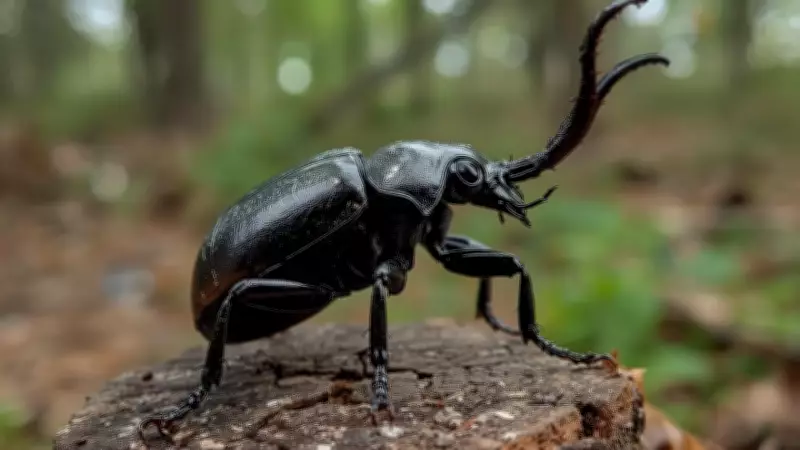
Native to the arid scrublands of California and Arizona, the diabolical ironclad beetle (Phloeodes diabolicus) is a flightless insect that has evolved formidable armor to protect itself from predators like shrews and coyotes. Weighing a mere three grams, its exoskeleton can withstand approximately 100 Newtons of force—equivalent to the pressure of a car tire on dirt—without buckling.
"A car tire would apply a force of about 100 Newtons if running over the beetle on a dirt surface," explained Pablo Zavattieri, a professor at Purdue University and co-author of the groundbreaking study. In laboratory tests, researchers at the University of California, Irvine, led by David Kisailus, subjected a specimen to 150 Newtons of force using compressive steel plates. This amounts to 39,000 times the beetle's body weight before any fracture occurred, while other land beetles failed at half that load.

"This diabolical ironclad beetle is not able to fly away, so it’s adapted to living on the ground. It pretty much has to stand there and take it," Kisailus noted, highlighting experiments where the beetle emerged unscathed after two simulated car rollovers.
Decoding the Jigsaw Armor: A Masterpiece of Evolution
CT scans revealed the beetle's defense mechanism: its elytra, or hardened forewings, are fused into a shield that meets at a central suture resembling interlocking jigsaw puzzle blades. This design creates a double-layered defense system. When compressed, the puzzle-piece blades lock tightly, preventing them from separating. Simultaneously, the layers delaminate gracefully, absorbing energy through controlled crumpling without catastrophic failure.
"The suture kind of acts like a jigsaw puzzle. It connects various exoskeletal blades puzzle pieces in the abdomen under the elytra," Zavattieri described, after simulations and 3D-printed replicas confirmed the mechanism. This setup dissipates force away from the vulnerable neck region, where most beetles would snap. The elytra's layered protein fibers, rich in glycine and cross-linked like a tough honeycomb, provide flexibility without brittleness. In compression tests, Kisailus's team found the exoskeleton to be 105% tougher than aircraft aluminum standards.
"We had to test the folklore," Kisailus admitted, laughing about verifying roadkill myths with actual run-over experiments.
From Bug to Bolts: Engineering Inspiration for a Tougher Future
Nature's ingenuity is now inspiring human innovation. Zavattieri's team mimicked the beetle's suture in carbon-fiber fasteners, creating components as strong as metal ones but far more resilient, bending before breaking. "This work shows that we may be able to shift from using strong, brittle materials to ones that can be both strong and tough by dissipating energy as they break. That’s what nature has enabled the diabolical ironclad beetle to do," Zavattieri concluded in the Nature paper.
Potential applications are vast. Imagine bicycle helmets or drone frames incorporating this beetle's clever trick, resulting in lighter equipment that crumples optimally in impacts to protect users. Kisailus's team, experienced in biomimicry from previous studies on mantis shrimp punches, is now exploring fixes for aircraft, such as wing joints or fuselage parts designed to withstand bird strikes.
The beetle's low metabolism, with energy diverted from flight into armor, contributes to its durability. Its exoskeleton composition—35% protein, 35% chitin, and a mineral matrix—provides rigidity and strength.

A Lesson in Resilience: Honoring Nature's Survivor
Beyond the laboratory, this story humbles us. In a world of relentless predators, evolution has crafted a living tank from scratch, without advanced technology. If you ever spot a diabolical ironclad beetle in the wild, resist the urge to drive over it. Instead, tip your hat to a survivor whose uncrushable spirit is teaching us how to build a tougher, more resilient future.