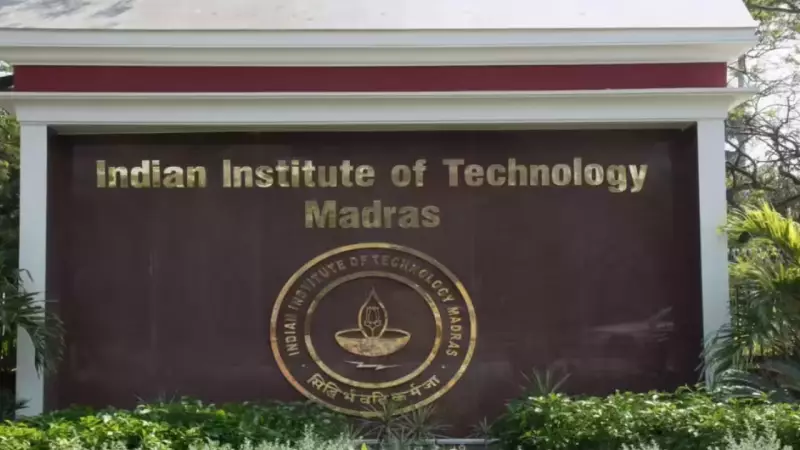
India's quest for technological self-reliance reached a significant milestone this month with the inauguration of the PARAM SHAKTI supercomputing facility at the Indian Institute of Technology Madras (IIT Madras). The event, led by S. Krishnan, Secretary of the Ministry of Electronics and Information Technology (MeitY), signified more than just the activation of a powerful machine; it represented a strategic leap in building sovereign scientific infrastructure.
The Engine of Innovation: Param Rudra
At the core of the PARAM SHAKTI facility is the Param Rudra system, a fully indigenous supercomputer boasting a processing power of 3.1 petaflops. This means it can execute over 3.1 quadrillion calculations every second. Developed by the Centre for Development of Advanced Computing (C-DAC), the system is built on the indigenous RUDRA server series and uses a homegrown software stack running on the open-source AlmaLinux platform.
This computational muscle translates into tangible benefits for Indian researchers. Complex simulations in fields like aerospace engineering, advanced materials, climate modeling, and pharmaceutical research that once took years can now be completed in months or even weeks. The facility, which has been operational since May 2025, is already running at over 80% utilization, handling projects from sub-atomic studies to large-scale structural analysis.

A National Mission for Strategic Autonomy
The launch is a key achievement of the National Supercomputing Mission (NSM), a joint initiative of MeitY and the Department of Science and Technology. Secretary S. Krishnan emphasized that the mission's philosophy moves beyond mere access to fostering ownership and diversity. "We are supporting a wide range of use cases... designed to operate at a scale that can make a real difference," he stated.
Krishnan also connected this approach to the broader IndiaAI Mission, highlighting a conscious strategy to avoid dependency on any single technology or type of GPU. "This approach strengthens resilience, encourages informed technology choices and ensures that India’s AI ecosystem does not become dependent on any one solution," he explained. The NSM has already deployed 37 supercomputers across the country, with more, including a major system in Bengaluru, in the pipeline.
Energy Efficiency and Open-Source Excellence
PARAM SHAKTI is not just powerful but also efficient, with a Power Usage Effectiveness (PUE) between 1.2 and 1.4, reflecting a strong focus on sustainable high-performance computing. IIT Madras Director, Prof. V. Kamakoti, urged students to develop energy-efficient and robust code, tracing the lineage of this facility back to earlier national investments like the National Knowledge Network.
The event also showcased indigenous software prowess, such as "MicroSim", an open-source multi-GPU solver developed at IIT Madras that is now ranked among the fastest globally in its category. Shri E. Magesh from C-DAC reflected on the long development journey of the Rudra platform.
Together, these elements underscore a pivotal shift for India. The nation's scientific ambition is increasingly powered by homegrown competence—from hardware and software to the applications they run. As India sets its sights on exascale computing, facilities like PARAM SHAKTI at IIT Madras are building blocks of strategic confidence, enabling the country to build, control, and leverage the computational foundations of modern research and innovation.