In a significant boost for India's agricultural self-reliance, scientists have developed a homegrown gene editing technology that promises to make genome-edited (GE) crop breeding more affordable and accessible. The Indian Council of Agricultural Research (ICAR) has recently secured a patent for this innovative system, which uses TnpB proteins as an indigenous alternative to the globally controlled CRISPR-Cas technology.
What Makes This Indigenous Technology Special?
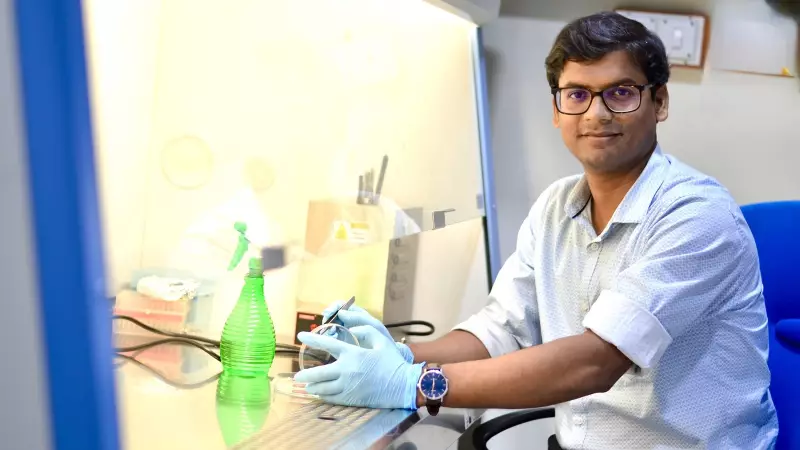
The new GE technology, developed under the leadership of Dr. Kutubuddin Ali Molla, senior scientist at ICAR's Central Rice Research Institute in Cuttack, employs Transposon-associated proteins (TnpB) instead of the proprietary CRISPR-Cas proteins. These proteins function as 'molecular scissors' that precisely cut DNA at predetermined locations, enabling scientists to modify gene sequences for desirable crop traits.
The patent for this invention, titled "Systems and Methods for Targeted Genome-Editing in Plants," was filed on August 31, 2022, and officially granted by the Indian Patent Office on September 15, 2025, providing protection for 20 years. ICAR has also filed an international patent under the Patent Cooperation Treaty to seek protection in other countries.

Overcoming Global IP Restrictions
The development comes at a crucial time when Indian agricultural scientists face significant challenges in commercializing GE crops due to intellectual property constraints. The widely used CRISPR-Cas technologies are controlled primarily by the Broad Institute (a partnership between MIT and Harvard) and the US agricultural giant Corteva Agriscience.
While Indian scientists have successfully developed GE rice varieties using CRISPR technology, their commercial cultivation has been hindered by potential licensing fees that these global patent holders may demand. ICAR officials confirmed that negotiations with Corteva and Broad Institute have been ongoing since July 2025, with India seeking fee waivers, particularly for small and marginal farmers.
The Technical Advantage: Why Size Matters
The TnpB proteins developed by Dr. Molla's team offer a crucial technical advantage: their compact size. While Cas9 proteins contain 1,000-1,400 amino acids and Cas12a has approximately 1,300, the TnpB molecules are significantly smaller, with only 400-500 amino acids per molecule.
Dr. Molla, whose work has been published in the prestigious Plant Biotechnology journal and highlighted in ChemistryEurope and Nature India, explains this advantage vividly: "If Cas9 and Cas12a are footballs, TnpBs are baseballs."
This compactness enables more efficient delivery into plant cells. Unlike bulkier Cas proteins that require agrobacterium tissue culture media for transfer, the hypercompact TnpB editor (sourced from extreme environment-surviving bacteria Deinococcus radiodurans and only 408 amino acids long) can be packed in viral vectors and directly injected into cells.
The technology represents a significant step forward in India's agricultural biotechnology capabilities, offering researchers a tool free from external IP restrictions while addressing concerns about foreign multinational control over crucial food production technologies.