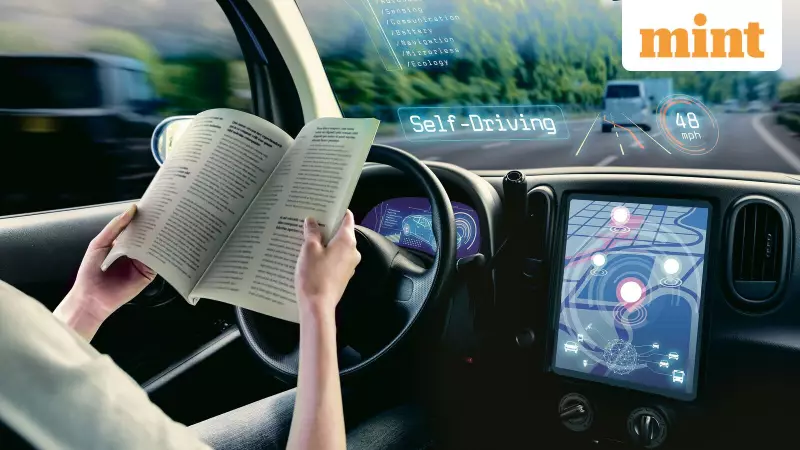
The Indian government is spearheading a transformative initiative to make the nation's highways 'talk' to vehicles. This move aims to create a fully integrated, safe, and efficient transport network for the future of mobility.
Bridging the Smart Vehicle Gap with CCV Protocol
At the heart of this ambitious plan is the development of a new Connected Commercial Vehicle (CCV) protocol. According to two officials familiar with the development, this system will establish a single communication standard. This standard will allow diverse vehicles and road infrastructure to interact seamlessly, addressing a critical gap. While modern vehicles are increasingly equipped for smart communication, the surrounding infrastructure has largely remained unresponsive.
The protocol is designed to enable vehicle-to-everything (V2X) connectivity. V2X allows vehicles to exchange vital information with other vehicles, traffic signals, toll plazas, and more. Discussions on this plan involve key bodies like the Union Ministry of Road Transport and Highways, the National Highways Authority of India (NHAI), NITI Aayog, and industry representatives.

Building a Connected Electric Highway Ecosystem
The initiative is closely tied to India's electric vehicle (EV) ambitions. The goal is to move beyond isolated charging stations and create a fully connected electric highway ecosystem. In this system, vehicles, gantries, charging points, and control centres would all communicate using a common language.
As India prepares for large-scale long-haul electric mobility on national corridors, the focus is on creating common communication protocols. These will allow electric cars, buses, and freight vehicles to integrate with third-generation (3G) mobility networks, encompassing charging infrastructure, tolling systems, and V2X platforms.
Shyamasis Das, a research fellow at the Centre for Social and Economic Progress (CSEP), highlighted the value of data. Real-world information on truck movement and highway usage could lead to a better understanding of costs and charging needs, enabling more effective e-truck deployment.
Regulatory Shifts and Infrastructure Investment
The plan necessitates significant regulatory changes to break down silos between highways, enforcement agencies, vehicle manufacturers, and infrastructure operators. The Centre is examining these changes to foster interoperability.
Experts like Shantanu Das, Chief Architect – Automotive at Sasken Technologies, explain that V2X platforms often operate without relying solely on cellular networks like 4G or 5G. They enable critical information exchange for emergencies, accident warnings, fog alerts, and clearing paths for emergency vehicles. While such standards are used in the US, Europe, Japan, and China, their adoption in India requires improved road conditions, clear lane markings, and upgraded roadside equipment.
This infrastructure upgrade will demand substantial investment but will also open opportunities for local automotive suppliers, semiconductor companies, and communication infrastructure providers.
The push comes alongside rising EV adoption in India. Over 2 million EVs were sold in 2025, making up about 8% of the 27.4 million new vehicles sold. The EV market, valued at approximately $55 billion in 2025, is projected to double by 2029. Supporting this growth, the government plans to install over 72,000 public charging stations by FY28 under the PM E-Drive scheme and is developing a unified EV charging app.
An industry participant noted, "The direction is clear—electric mobility on highways cannot scale without interoperability. Regulations are now catching up with technology." This comprehensive plan marks a decisive step towards a smarter, safer, and connected transportation future for India.