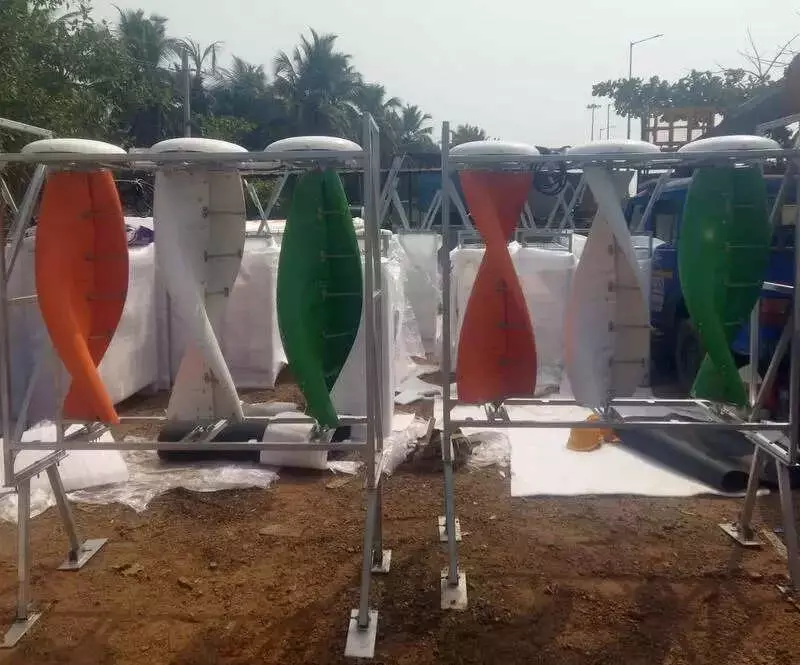
In a landmark move for sustainable infrastructure, India's first rooftop-mounted vertical axis wind turbine (VAWT) is being installed at a highway toll plaza in Karnataka. The pioneering pilot project is taking shape at the Hejamadi toll plaza near Mangaluru, spearheaded by Udupi Tollway Pvt Ltd in collaboration with the National Highways Authority of India (NHAI).
A New Spin on Highway Energy
The installation features a 10 kW vertical axis wind turbine, set up on a pilot basis. While the initial scale is modest, NHAI project director Abdulla Javed Azmi emphasized that the initiative is a significant proof of concept. It demonstrates the practical feasibility of weaving wind power into the fabric of the country's vast highway network. This effort dovetails with the national program dedicated to creating sustainable and greener highways.
Azmi detailed the distinct advantages that make VAWTs suitable for such locations. Unlike traditional horizontal turbines, VAWTs can capture wind from all directions. This makes them highly effective in areas with turbulent or shifting wind patterns, commonly found in coastal zones like the west coast and in mountainous regions.

Quiet, Efficient, and Bird-Friendly
The official highlighted several other benefits. These turbines generate considerably less noise due to their slower blade rotation, making them neighbor-friendly for sites near residential areas. They are also capable of generating power at low wind speeds starting from 2.5 meters per second, ensuring more consistent electricity generation throughout the day and night.
"Most major components, including the generator, are positioned at the base on the ground," Azmi explained. This design simplifies installation and maintenance, removes the need for tall and costly towers, and significantly improves worker safety. With a smaller physical footprint and a modern aesthetic, VAWTs can blend seamlessly with buildings and are permissible in zones where conventional turbines face restrictions.
An important ecological benefit is the reduced risk to bird populations due to the lower blade speed and profile. Furthermore, certain H-type VAWT models are engineered to withstand very strong winds, adding to their durability.
Powering a Hybrid Future
The project is a strategic step towards hybrid renewable energy systems. VAWTs can perfectly complement existing solar power installations by generating electricity during the night, on cloudy days, or during windy periods when solar output is low. This synergy contributes to greater energy reliability and supports potential off-grid solutions for highway infrastructure.
The west coast's consistent sea breezes provide favourable wind conditions, ideal for small to medium-scale wind projects and hybrid solar-wind systems. This ensures a more stable and continuous output of renewable energy.
In terms of output, the 10 kW VAWT is estimated to generate between 38 kWh to 72 kWh of electricity daily. On an annual basis, this pilot project is expected to reduce carbon dioxide emissions by approximately 20 tonnes.
Udupi Tollway Pvt Ltd has been actively promoting renewable energy in alignment with the vision of the Ministry of Road Transport and Highways (MoRTH) and NHAI. As part of this commitment, 60 kW grid-connected rooftop solar plants are already operational at all three toll plazas—Sastan, Hejamadi, and Talapady—along the NH-66 Kundapur–Surathkal and Mangaluru–Kerala border road project. The new wind turbine is expected to be fully installed within the next two days, marking a new chapter in India's green highway journey.