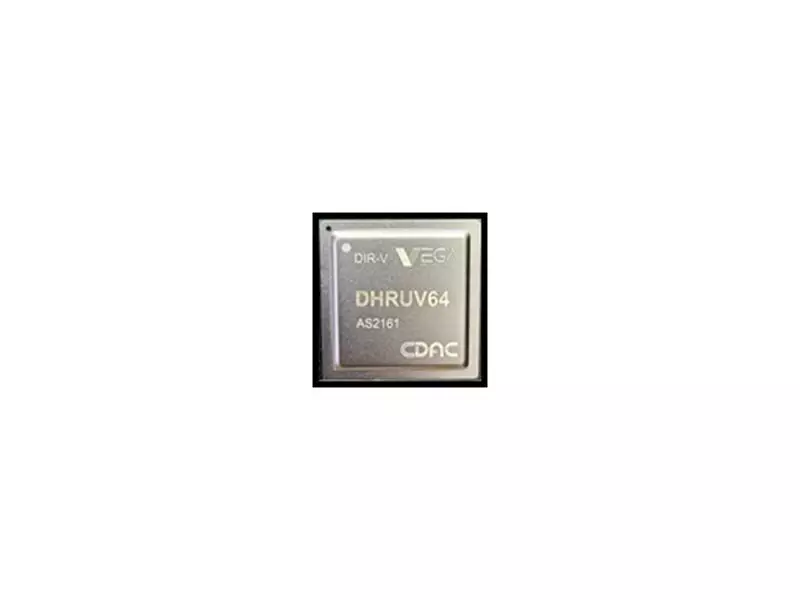
In a significant leap towards technological self-reliance, India has proudly unveiled its first completely indigenous 64-bit dual-core microprocessor. Named Dhruv64, this groundbreaking processor marks a pivotal moment for the nation's strategic electronics and semiconductor ambitions under the Atmanirbhar Bharat initiative.
A Strategic Launch in Gandhinagar
The official launch ceremony took place on October 10, 2024, at the prestigious Mahatma Mandir Convention and Exhibition Centre in Gandhinagar, Gujarat. The event was graced by the presence of Union Minister of State for Electronics and Information Technology, Jitin Prasada, who highlighted the processor's importance for national security and technological sovereignty.
Developed through a collaborative effort between the Centre for Development of Advanced Computing (C-DAC) and the Indian Institute of Technology, Madras (IIT Madras), Dhruv64 is built on the open-standard RISC-V architecture. This choice ensures freedom from proprietary instruction set architectures and associated licensing fees, a crucial step for an independent technological ecosystem.

Technical Prowess and Capabilities
Dhruv64 is not just a symbolic achievement; it is a capable processor designed for real-world applications. Fabricated using a 28-nanometer process technology, it operates at a clock speed of 1.5 GHz. The dual-core design allows for efficient multitasking and parallel processing.
The processor's capabilities are demonstrated through its successful integration into a Single Board Computer (SBC). This SBC, showcased at the launch, is a fully functional computer system capable of running a standard software stack, proving Dhruv64's readiness for deployment.
Key technical specifications and features of Dhruv64 include:
- Architecture: 64-bit, dual-core, based on open RISC-V ISA.
- Clock Speed: 1.5 GHz.
- Process Node: 28nm fabrication technology.
- Memory Support: Integrated DDR3 memory controller.
- Connectivity: Support for standard interfaces like USB, PCIe, and Gigabit Ethernet.
- Security: Incorporates built-in hardware security features, a critical aspect for strategic applications.
Driving Atmanirbhar Bharat in Electronics
The development of Dhruv64 is a cornerstone project for achieving self-sufficiency in the design and manufacturing of critical electronic components. Minister Jitin Prasada emphasized that such indigenous innovations are vital for reducing dependence on foreign imports, particularly in strategic sectors like defence, aerospace, and telecommunications.
This initiative aligns perfectly with the broader Digital India and Make in India campaigns, fostering a homegrown ecosystem for semiconductor design. The success of Dhruv64 paves the way for more complex and powerful indigenous processors in the future, creating opportunities for Indian startups and established companies alike.
The potential applications for Dhruv64 are vast and strategically important:

- Defence and Aerospace: Powering navigation systems, communication devices, and surveillance equipment where security and control over the supply chain are paramount.
- Industrial Automation: Serving as the brain for programmable logic controllers (PLCs) and robotics in smart manufacturing.
- Consumer Electronics: Laying the foundation for future Indian-designed smart devices, set-top boxes, and IoT products.
- Research and Education: Providing a platform for Indian academia and researchers to experiment and innovate on homegrown hardware.
The launch of Dhruv64 is more than just a product announcement; it is a statement of intent. It demonstrates India's growing prowess in semiconductor design and its unwavering commitment to securing its digital future. By mastering the design of such core components, India is not only protecting its strategic interests but also positioning itself as a future leader in the global electronics value chain.