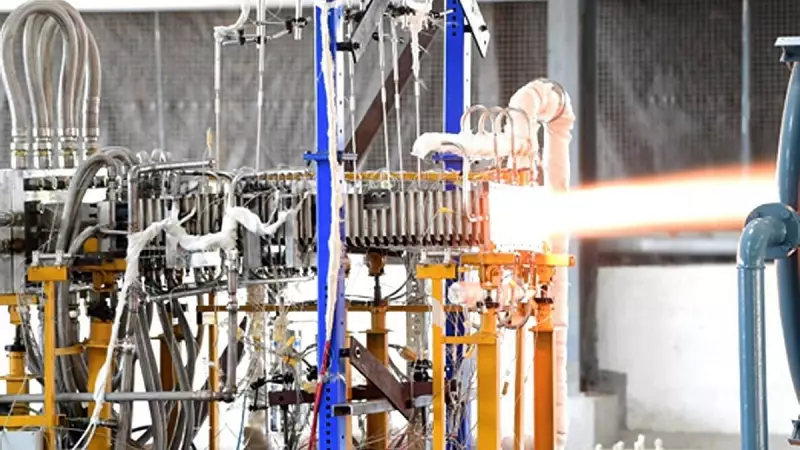
India has taken a significant stride towards developing its own hypersonic missile capability following a successful test conducted by the Defence Research and Development Organisation (DRDO). This critical advancement places the nation among a select group of countries actively pursuing this frontier technology.
Understanding the Hypersonic Leap
The test, reported on 09 January 2026, marks a pivotal moment for India's defense research. Hypersonic cruise missiles represent the next generation of strategic weaponry, defined by their ability to sustain speeds exceeding five times the speed of sound. This translates to velocities greater than 6,100 kilometers per hour for extended durations during flight.
The core of this technology lies in its sophisticated propulsion system. Unlike traditional rockets that carry oxidizers, these missiles utilize advanced air-breathing engines. This allows them to suck in atmospheric oxygen to mix with fuel, enabling supersonic combustion—a process known as scramjet operation. This capability is what permits sustained hypersonic flight within the atmosphere, making them exceptionally fast and maneuverable.

Strategic Implications for National Security
The successful development of indigenous hypersonic technology carries profound strategic weight. Possessing such systems would dramatically enhance India's deterrence posture and strategic strike capabilities. The extreme speed and potential maneuverability of hypersonic glide vehicles and cruise missiles pose significant challenges to existing missile defense architectures.
This test underscores DRDO's focused efforts in mastering complex aerospace domains. Mastering the scramjet technology, which involves managing intense heat and controlling combustion at phenomenal speeds, is a testament to the organization's growing expertise.
The Road Ahead for India's Defense
While the test is a landmark achievement, it represents a step in a longer developmental journey. The path from a successful technology demonstrator to a fully operational, deployable weapons system involves further rigorous testing, integration, and validation. However, this progress undeniably narrows the technological gap with other global powers who are in the hypersonic race.
The advancement signals India's unwavering commitment to achieving self-reliance (Atmanirbharta) in critical defense technologies. It strengthens the country's hand in a rapidly evolving global security environment where hypersonic weapons are poised to redefine warfare paradigms. The news, first highlighted by journalist SNV Sudhir, confirms India's serious intent to secure its place in this elite technological arena.