In a landmark achievement for India's defence self-reliance, the Defence Research and Development Organisation (DRDO) has successfully conducted a high-speed rocket-sled test of a fighter aircraft escape system. This critical test, carried out on Tuesday, December 2, 2025, at a controlled velocity of 800 kilometres per hour, propels India into an elite group of nations with advanced in-house capabilities for testing pilot safety mechanisms.
A Closer Look at the Groundbreaking Test
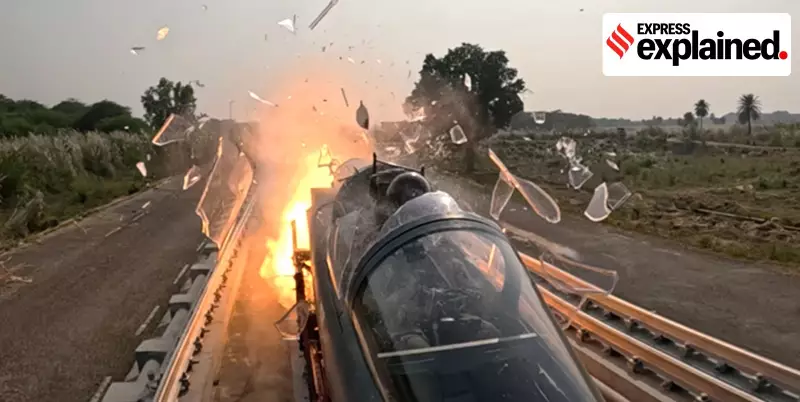
The dynamic test was executed at the Rail Track Rocket Sled (RTRS) facility of the Terminal Ballistics Research Laboratory (TBRL) in Chandigarh. It was a collaborative effort involving the DRDO, the Aeronautical Development Agency (ADA) under the Ministry of Defence, and the public sector giant Hindustan Aeronautics Limited (HAL). The test featured a system mounted with the forebody of the indigenous Light Combat Aircraft (LCA) Tejas.
The rocket sled system simulates the extreme aerodynamic conditions of an aircraft in flight by propelling a test platform along rail tracks using rockets. For this specific trial, a dual-sled system was employed, and the target speed of 800 km/h was achieved through the precisely timed, phased firing of multiple solid propellant rocket motors. The entire event was meticulously recorded using advanced onboard and ground-based imaging systems.

Why This Test is a Game-Changer for Pilot Safety
Dynamic ejection tests are far more complex and revealing than static tests conducted with a stationary aircraft. They are the definitive method for evaluating life-saving systems like ejection seats and canopy severance mechanisms, which must function flawlessly in a split second under immense stress.
During high-speed emergencies, pilots are subjected to extreme aerodynamic forces. Ejection sequences involve a meticulously timed chain of events: canopy removal, seat firing, stabilisation, and parachute deployment. Any error in this millisecond-precise sequence can lead to catastrophic injury. This test used instrumented, human-like dummies fitted with sensors to record the critical physical stresses—loads, moments, and accelerations—a pilot would endure during an actual ejection.
Officials from the Indian Air Force (IAF) and the Institute of Aerospace Medicine witnessed the successful trial. Following the test, Defence Minister Rajnath Singh commended the DRDO, IAF, ADA, HAL, and the wider industry, calling it a significant milestone for indigenous defence capability.
Strategic and Economic Implications of Indigenous Testing
This successful test carries profound strategic importance. Until now, India had to depend on foreign test facilities to certify and validate the performance of ejection systems for its fighter jets. Possessing an in-house, state-of-the-art dynamic testing facility dramatically boosts India's strategic autonomy.
A DRDO scientist highlighted that this capability not only reduces foreign dependency but also significantly shortens development cycles for current and future fighter platforms. Furthermore, it offers substantial cost benefits. Sources indicate that conducting such tests indigenously costs only one-fourth to one-fifth of what it would abroad.
The TBRL's RTRS facility, operational since 2014 and capable of supersonic testing, has previously validated systems for ambitious projects like the Gaganyaan crew module parachutes. The escape system testing setup, enhanced with high-speed cameras and measurement mechanisms over the past year, now stands as a cornerstone of India's growing defence R&D ecosystem, ensuring that the nation's pilots are protected by the most rigorously tested safety systems.