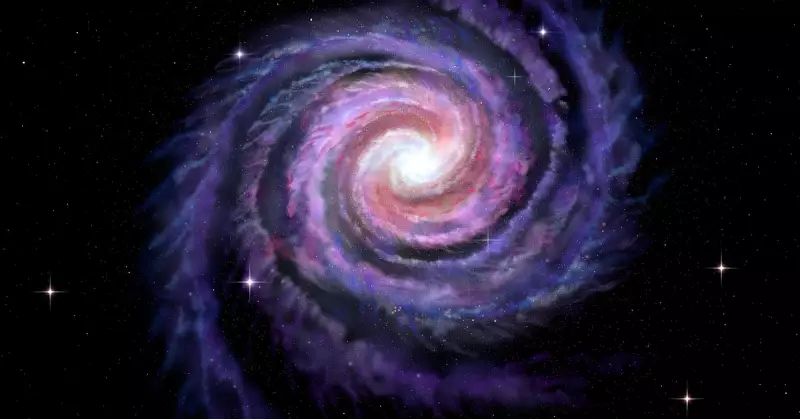
In a discovery that reshapes our understanding of the cosmos, a team of Indian scientists has identified one of the most distant spiral galaxies ever observed, named 'Alaknanda.' This finding, announced on 02 December 2025, directly challenges established theories about how quickly galaxies could form and develop complex structures in the early universe.
A Cosmic Anomaly in the Baby Universe
The galaxy, christened Alaknanda, was observed as it existed when the universe was in its relative infancy. The presence of a well-defined spiral structure at such an immense look-back time is a profound surprise for astrophysicists. Current models of cosmic evolution suggested that the universe needed more time to settle and for galaxies to acquire such intricate, ordered forms. The discovery of Alaknanda implies that the processes driving the formation of complex galactic architectures were at work much earlier than previously believed.
Challenging Established Theories
The identification of this distant spiral galaxy forces a significant re-evaluation of existing astrophysical theories. Scientists, including the team led by Kalyan Ray, now must contend with data showing that galaxies could emerge and mature into sophisticated shapes like spirals with remarkable speed. This finding pushes the boundaries of our knowledge, suggesting that the early universe was a more dynamic and rapidly evolving place. It raises critical questions about the mechanisms that could catalyze such rapid structural development in galactic bodies.

Implications and Future Research
The discovery of the Alaknanda galaxy is more than a record-breaking observation; it is a pivotal clue in the puzzle of cosmic evolution. It highlights key areas for future investigation:
- Revisiting Simulation Models: Cosmological simulations will need to be updated to account for the rapid emergence of structured galaxies.
- Search for Similar Objects: Astronomers will likely intensify their search for similar distant spiral galaxies to determine if Alaknanda is unique or part of a larger population.
- Understanding Galactic Dynamics: The find prompts a deeper study into the specific conditions—such as density of matter, dark matter halos, and early star formation rates—that could foster spiral arms so soon after the Big Bang.
This breakthrough, credited to the dedicated work of Indian researchers, not only places India firmly on the global map of cutting-edge space science but also opens a new chapter in our quest to understand the universe's formative years. The galaxy Alaknanda stands as a testament to the unexpected complexities hidden in the depths of space and time.