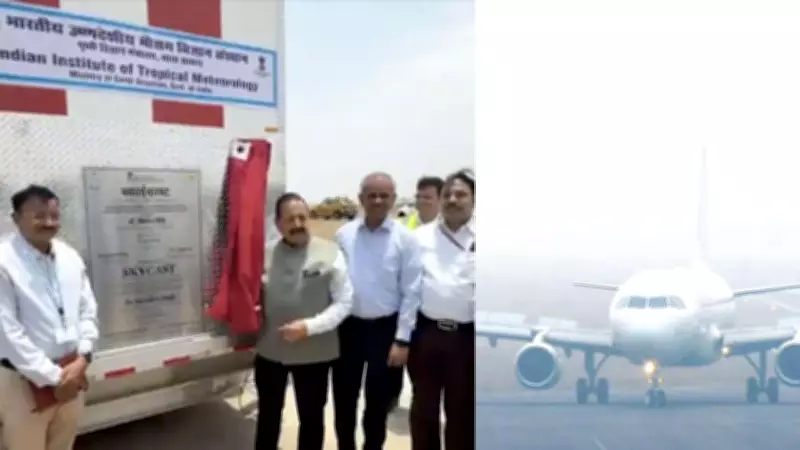
India has commissioned its first SkyCast System at Delhi Airport, an advanced aviation weather monitoring platform designed to tackle fog-related disruptions. The technology provides real-time weather intelligence and early warnings for aviation hazards, helping airlines and controllers make faster operational decisions. Officials say the system could significantly reduce winter flight delays while improving safety and efficiency across India's aviation sector.
The SkyCast System represents a major leap forward in aviation weather forecasting. By integrating data from multiple sensors, including lidar, radar, and satellite feeds, it can detect fog formation up to three hours in advance with high accuracy. This early warning capability allows airlines to pre-position aircraft, adjust schedules, and minimize passenger inconvenience. Controllers can also use the data to optimize runway usage and reduce holding times.
Delhi Airport, one of the busiest in the world, experiences severe fog during winter months, often leading to hundreds of flight cancellations and delays. The new system is expected to cut weather-related disruptions by up to 40%, according to aviation ministry sources. The technology was developed in collaboration with Indian and international meteorological agencies and has been tested extensively over the past two years.

Beyond fog, the SkyCast System can monitor other hazards such as thunderstorms, wind shear, and low visibility, providing a comprehensive weather picture for air traffic management. The government plans to roll out similar systems at other major airports, including Mumbai, Bangalore, and Kolkata, over the next two years. This initiative aligns with India's broader efforts to modernize its aviation infrastructure and enhance passenger experience.
Industry experts have welcomed the move, noting that it addresses a critical gap in India's aviation ecosystem. The system not only improves operational efficiency but also contributes to flight safety, reducing the risk of accidents caused by adverse weather. With air traffic in India growing rapidly, such technologies are essential to maintain punctuality and reliability.