Gujarat Scientists Pioneer Nature-Based Sewage Treatment System That Operates Without Electricity
As urban centers across India grapple with escalating sewage volumes and the prohibitive costs of conventional treatment methods, researchers in Gujarat have unveiled a groundbreaking nature-inspired solution that could revolutionize wastewater management nationwide. This innovative technology enables residential communities to process their own sewage at dramatically reduced costs while completely eliminating electricity requirements, potentially saving municipal corporations crores of rupees in infrastructure and operational expenses.
The Smart Wetland System: How It Works
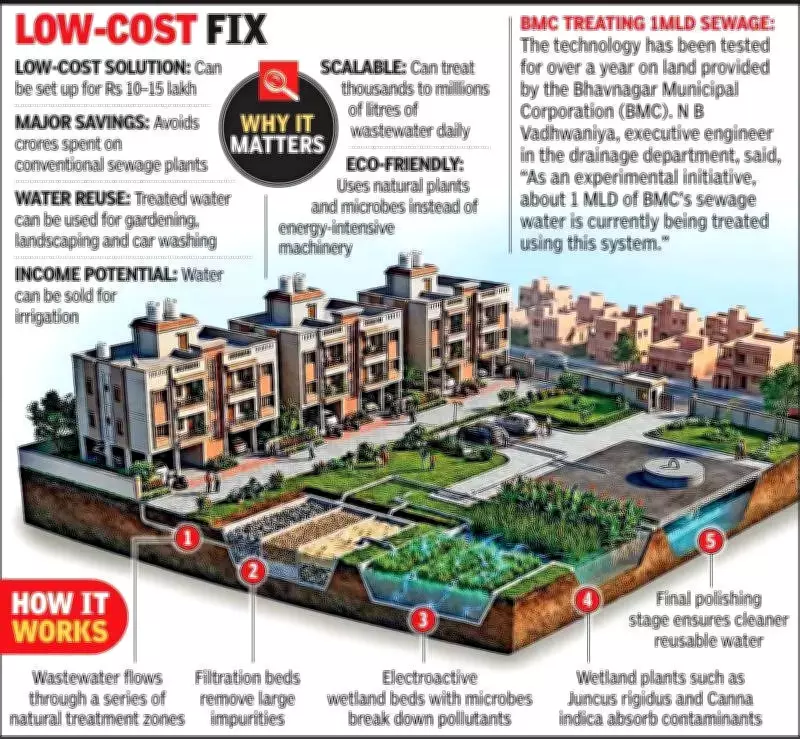
Scientists at the CSIR-Central Salt & Marine Chemicals Research Institute (CSMCRI) in Bhavnagar have engineered an advanced nature-based sewage treatment system that mimics the natural purification processes of wetlands. Unlike traditional sewage treatment plants that depend on expensive machinery and energy-intensive operations, this system harnesses the power of carefully selected plants, beneficial microbes, and specially designed treatment beds to cleanse wastewater through entirely natural mechanisms.
The "smart wetland system" can be implemented with a one-time capital investment ranging between Rs 10 lakh and Rs 15 lakh, representing a fraction of the cost associated with conventional sewage treatment facilities that often require several crores for construction and ongoing maintenance. The system operates through a multi-stage purification process where wastewater flows sequentially through different treatment zones, each optimized for specific cleansing functions.

Natural Components and Treatment Process
The technology utilizes specific wetland plants including Juncus rigidus (commonly known as sea rush) and Canna indica (Indian shot), which play crucial roles in absorbing pollutants and heavy metals from the wastewater. Simultaneously, naturally occurring microbial communities break down organic contaminants through biological processes.
"The system functions as a completely self-contained, nature-based treatment setup," explained senior scientist Sanak Ray. "Wastewater progresses through multiple purification stages including initial filtration, electroactive wetlands, constructed wetlands, and a final polishing stage that ensures the water meets reuse standards."
Key Advantages and Applications
One of the most remarkable aspects of this technology is its complete independence from electrical power. The electroactive wetland component actually generates a small electric potential during the treatment process, making the system entirely self-sufficient. This innovative approach can effectively treat various wastewater types including:
- Domestic sewage from residential complexes
- Aquaculture effluent
- Stormwater runoff
- Slightly saline water
For housing societies and apartment complexes, this technology presents a practical solution for localized wastewater management. The treated water can be repurposed for numerous non-potable applications including:
- Gardening and landscaping
- Car washing and vehicle maintenance
- Irrigation for agricultural purposes
- Industrial cooling processes
Commercial Deployment and Scalability
The research project received funding support from the Biotechnology Industry Research Assistance Council (BIRAC), and the technology has already been transferred to a private company for commercial implementation. This strategic partnership will facilitate adoption by municipalities, real estate developers, and environmental startups across India.
Experts emphasize that the system's modular design allows for flexible scaling, capable of treating anywhere from a few thousand liters to several million liters of wastewater daily. This scalability opens opportunities for diverse adopters including:

- Residential housing societies
- Non-governmental organizations
- Local municipal bodies
- Industrial complexes
- Agricultural cooperatives
This innovative approach transforms wastewater from an environmental liability into a valuable resource, potentially creating revenue streams through water recycling while significantly reducing the burden on municipal sewage infrastructure. The technology represents a significant advancement in sustainable urban development and water resource management for rapidly growing Indian cities.