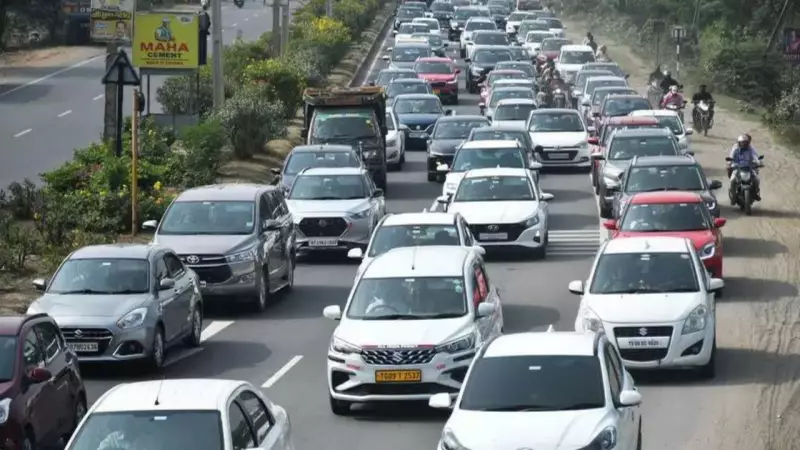
In a significant move aimed at making Indian roads safer, the government is actively working to introduce advanced vehicle-to-vehicle (V2V) communication technology. This initiative, announced by Union Minister for Road Transport and Highways Nitin Gadkari, seeks to leverage real-time data sharing between vehicles to prevent collisions and reduce the staggering number of road fatalities in the country.
How V2V Communication Will Work
Addressing the media in New Delhi after chairing a meeting with state transport ministers, Gadkari outlined the plan. A joint task force has been established with the Department of Telecommunications (DoT) to drive this initiative forward. The DoT has agreed in principle to allocate the 30 MHz radio spectrum in the 5.875–5.905 GHz band specifically for V2V communication purposes.
Under the proposed system, vehicles equipped with this technology will wirelessly exchange critical information with each other. This includes data on speed, location, acceleration, and braking status. The key benefit will be alerts to drivers about potential hazards, such as a vehicle in a blind spot or sudden braking by a car ahead, allowing for timely corrective action and potentially avoiding accidents.

A Multi-Pronged Attack on Road Fatalities
Gadkari emphasized that V2V is part of a broader strategy to improve road safety. He shared grim statistics to underline the urgency: India witnesses 5 lakh road accidents every year, resulting in approximately 1.8 lakh deaths. Alarmingly, about 66% of those killed are young people in the 18-34 age group.
The government's approach integrates three core elements:
- Better road engineering and infrastructure.
- Stricter enforcement of traffic laws.
- Higher penalties for violations.
To institutionalize these measures, the government will bring 61 amendments to the Motor Vehicles Act in the upcoming Budget session of Parliament. These amendments aim to enhance road safety, promote ease of doing business, improve citizen services, and align regulations with global standards.
Broader Safety Reforms on the Agenda
The ministers' meeting covered a wide range of issues beyond V2V. Key discussions included:
Enhanced Safety Norms: For buses, sleeper coaches, and passenger vehicles, including bus body codes and Bharat NCAP crash test ratings.
Phased Introduction of ADAS: Plans for a gradual rollout of Advanced Driver Assistance Systems in vehicles.
Digital Tracking and Permits: Deliberations on introducing a points-based system for tracking traffic violations and enabling digital, automated issuance of permits for goods vehicles up to a specified weight.
This comprehensive push signals the government's commitment to leveraging technology and regulatory reform to tackle the perennial challenge of road safety, aiming to protect lives, especially of the nation's youth.