From Cabbage Patch to Cosmos: How Goddard's 1926 Rocket Launched Space Age
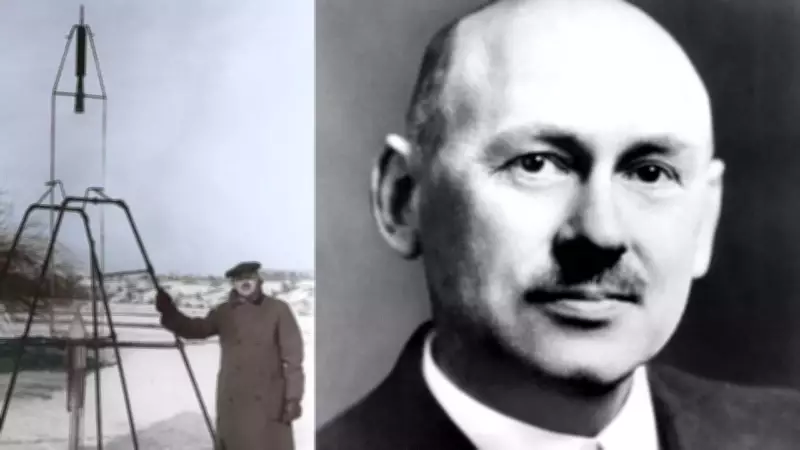
In a quiet cabbage patch in Auburn, Massachusetts, a century ago, a brief but monumental event unfolded that would forever alter humanity's relationship with the skies. On March 16, 1926, Dr. Robert H. Goddard, a physics professor at Clark University, ignited a small rocket powered by liquid fuel. According to NASA records, this pioneering device flew for a mere 2.5 seconds, covering a distance of 184 feet (56 meters) before landing back in the vegetable field. This modest test marked the birth of liquid-fueled rocketry, a technology that would become the cornerstone of space exploration, enabling satellites, probes, and astronauts to venture far beyond Earth.
The Revolutionary Liquid Fuel Breakthrough
Goddard's rocket utilized a novel fuel mixture of liquid oxygen and gasoline, a combination considered unconventional at the time when most rockets relied on solid propellants. Solid fuels, once ignited, burned uncontrollably until exhaustion, offering no means of regulation. In stark contrast, Goddard's liquid-fuel approach introduced the possibility of throttling, controlling, and even steering the rocket. Although his initial flight was brief and covered only a short distance, it demonstrated the feasibility of controlled, powered flight—a concept that would prove transformative.
Over the subsequent years, Goddard relentlessly refined his designs, developing critical components such as pumps, engines, and guidance systems. These incremental advancements, including mechanisms to feed fuel into engines under immense pressure, laid the essential groundwork for all major launch vehicles in history. From his early cabbage patch experiments to later launches in New Mexico, Goddard's innovations established the foundation for space exploration, enabling missions to the Moon and beyond. March 16, 2026, will commemorate the 100th anniversary of this groundbreaking technological achievement.

Goddard's Legacy Powers Modern Space Missions
Fast forward a hundred years, and Goddard's pioneering work continues to propel humanity into the cosmos. NASA's Artemis 2 mission, set to orbit the Moon, features a towering 322-foot rocket that relies on a mixture of liquid hydrogen and oxygen for its main engines, supplemented by solid boosters for liftoff. This configuration echoes Goddard's principles, where liquid fuel enables precise control and sustained propulsion, while solid boosters provide the initial thrust. It is remarkable to consider that a 2.5-second flight in a cabbage patch could lead to such advanced endeavors, yet each Artemis mission builds upon this historical legacy.
Artemis 2 serves as a crucial shakedown mission, testing the Orion spacecraft's life support systems in preparation for more ambitious goals. Subsequent missions, Artemis 3 and 4, aim to achieve lunar orbit and landing, further expanding human presence in space. Goddard's vision of controlled rocketry has evolved into a sophisticated technology that not only explores the unknown but also inspires future generations of scientists and engineers. His legacy endures as a testament to how small beginnings can ignite monumental journeys, shaping the course of history and our understanding of the universe.