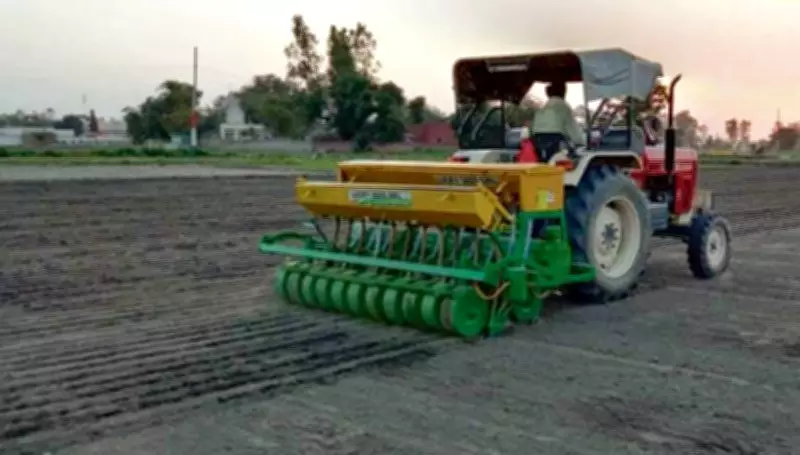
DSR Adoption Surges in Karnal District
Direct Seeded Rice (DSR), a water-efficient paddy cultivation method, is seeing a significant increase in adoption among farmers in Karnal district, Haryana. According to the Agriculture and Farmers’ Welfare Department, nearly 19,000 acres have been registered under the DSR scheme so far this season, a substantial rise from approximately 2,500 acres verified during the same period last year.
Government Target and Incentives
The department has set a target of bringing 30,000 acres under DSR this season. To encourage adoption, the Haryana Government is providing an incentive of Rs 4,500 per acre to farmers who successfully cultivate paddy using DSR, following physical verification of their fields.
Dr Wazir Singh, Deputy Director Agriculture (DDA), Karnal, stated, “The response from farmers is encouraging this year. Against a target of 30,000 acres under DSR, so far, around 19,000 acres have been registered. Last year, against the same target, around 12,000 acres were registered, but after physical verification, only about 2,500 acres were found eligible. Physical verification for this season is yet to be done.” He added that there is no cap on the area covered under the scheme.

Water and Cost Savings
Agriculture experts highlight that DSR eliminates the need for flooded fields during sowing. Instead, paddy is directly sown in wet or dry fields after pre-sowing and post-sowing irrigation, similar to other crops like cereals and pulses.
Dr Virender Lather, former Principal Scientist at ICAR-Indian Agricultural Research Institute (IARI), Delhi, explained, “After sowing through DSR, fields require irrigation only after 15 to 21 days, while traditional transplanted paddy requires continuous flooding. DSR saves nearly 30% of groundwater irrigation compared to conventional methods. Besides, it saves one third of the cost of cultivation and power.”
Farmer Experiences
Manoj, a farmer who adopted DSR on 32 acres, said the method is easy to implement. “Only weed management is a major issue, otherwise it is a water and labour-saving method for paddy cultivation,” he noted. Dharambir, another farmer using DSR on around 15 acres, described it as a better option than traditional methods for sustainable agriculture.
Current Paddy Cultivation in Karnal
According to department data, paddy is being cultivated on approximately 4.5 lakh acres in Karnal this year, compared to around 4.6 lakh acres last year. Of the total area, nearly 40% is under basmati varieties and the remaining 60% under non-basmati varieties. The Agriculture Department has commenced field inspections to verify whether paddy has been sown using the DSR method or conventional transplanting.
Dr Wazir Singh urged farmers to take maximum advantage of the DSR scheme and complete their registration promptly.