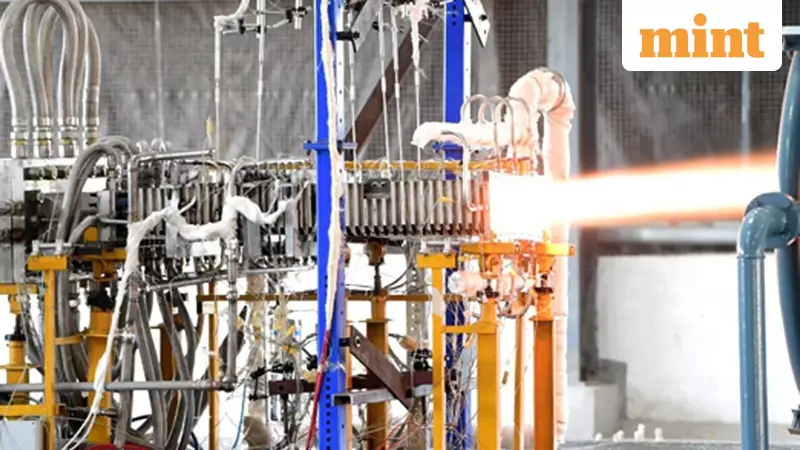
In a significant leap for India's indigenous defence capabilities, the Defence Research and Development Organisation (DRDO) has achieved a critical technological milestone. Its laboratory, the Defence Research and Development Laboratory (DRDL), has successfully conducted a ground test of its Actively Cooled Scramjet Full-Scale Combustor.
A Crucial Test for Hypersonic Flight
The test, conducted on 9 January 2026, marks a pivotal advancement in the development of air-breathing scramjet engine technology. A scramjet, or supersonic combustion ramjet, is an engine designed to operate at hypersonic speeds, typically above Mach 5. The combustor is the heart of this engine, where fuel mixes with air and ignites at incredibly high speeds.
The successful ground test validates the complex design and engineering of this core component. The "actively cooled" aspect is particularly crucial, as it refers to the system's ability to manage the extreme thermal loads generated during hypersonic flight, preventing the engine from melting. This achievement demonstrates that Indian scientists have mastered one of the most challenging aspects of hypersonic propulsion.

Implications for India's Defence and Aerospace
This breakthrough has far-reaching implications for India's strategic and technological prowess. The development of reliable scramjet technology is a cornerstone for next-generation missile systems and reusable launch vehicles. It paves the way for:
- Advanced Hypersonic Cruise Missiles: Enabling missiles that travel at speeds exceeding Mach 5, making them extremely difficult to intercept.
- Cost-Effective Satellite Launches: Contributing to the development of reusable launch vehicles that use air-breathing engines for initial ascent, potentially reducing satellite launch costs.
- Indigenous Technological Sovereignty: Reducing dependency on foreign technology and cementing India's position among a select group of nations mastering this cutting-edge domain.
The Road Ahead for DRDO
While the successful ground test of the full-scale combustor is a standalone achievement, it represents a vital step in a larger integration process. The next stages will involve integrating this combustor with other engine components like the inlet and nozzle, followed by comprehensive flight tests.
The announcement, shared by official channels, underscores the steady progress being made under India's defence research umbrella. As this is a developing story, further details on test parameters, performance data, and future timelines are awaited. This milestone firmly places the DRDO and its laboratory DRDL on the global map of hypersonic research, showcasing India's growing capability to innovate and deliver in high-stakes, advanced technological fields.