In a remarkable shift from aligning smiles to farming fish, a former dentist from Punjab has become a pioneering force in modern aquaculture. Dr. Amteshwar Singh Gill has established what is believed to be North India's largest fully mechanised Recirculating Aquaculture System (RAS) fish farm, generating an impressive annual output of over 30 tonnes of premium fish and revenue exceeding Rs 1.5 crore.
From Dental Clinic to High-Density Fish Tanks
Dr. Amteshwar Singh Gill, 40, left his dentistry practice to pursue a deep-seated passion for agriculture, a decision that has paid off spectacularly. For the past four years, he has operated his state-of-the-art facility, Golden Aqua RAS, in Bhagatpura village of Fatehgarh Sahib district. His farm, spread over just half an acre of land, stands as a testament to the power of technology-driven farming.
RAS is a modern method where fish are cultivated in tanks rather than traditional open ponds. The system continuously filters, cleans, and reuses water, leading to minimal water consumption and a fully controlled environment that protects the fish from external elements and diseases.

The Mechanics of a Mega-Profit Farm
Gill's sophisticated setup consists of eight large concrete tanks, each holding 90,000 litres of water. The total system capacity is a staggering 7.2 lakh litres. These tanks are housed under a large shed that regulates temperature, allowing for year-round production even during Punjab's harsh summers and winters.
The system is a marvel of automation. Tanks have sloping bottoms and vertical pipes that use water pressure to automatically flush out fish waste. Operations are monitored 24/7 via CCTV and advanced sensors that track critical water parameters like ammonia, dissolved oxygen, pH, and temperature.
Water treatment is a core component. Daily, about 1.5 lakh litres of water pass through drum filters and are purified using ozonators. A Moving Bed Biofilm Reactor (MBBR) employs beneficial bacteria to convert toxic ammonia from fish waste into harmless nitrate. This meticulous management results in a net profit margin of over 40%.
Premium Produce and Strategic Market Access
Unlike traditional Punjab fish farms that focus on species like Rohu and Catla, Gill strategically cultivates high-value, niche varieties. He exclusively grows Sole and Singhi (freshwater catfish), which command significantly higher market prices.
Sole fish matures in six months, weighs over 500 grams, and sells for Rs 800–900 per kg. Singhi matures in a year, weighs over 100 grams, and fetches Rs 300–400 per kg. Gill stocks four tanks with each species, with each tank producing nearly four tonnes of fish annually. The farm's proximity to the high-demand Tricity area (Chandigarh, Mohali, Panchkula) ensures excellent market access.
The efficiency is staggering: Gill's half-acre RAS setup achieves what would typically require 18 acres of land in traditional pond culture. He highlights that a single 25x25 feet tank in his system can yield 60% more fish than an entire acre of an open pond farm.
Investment, Subsidy, and Recognition
Establishing this pioneering unit required significant investment. While the government's estimated project cost for the largest RAS category is around Rs 50 lakh, Gill invested nearly Rs 1 crore, excluding land cost. He received a 40% government subsidy, amounting to about Rs 20 lakh, under a central government scheme promoting advanced aquaculture.
His operational costs include approximately Rs 8 lakh for fish seed, Rs 13 lakh for high-quality pellet feed, Rs 2.5 lakh for electricity, and about Rs 6-7 lakh in salaries for two full-time skilled staff.
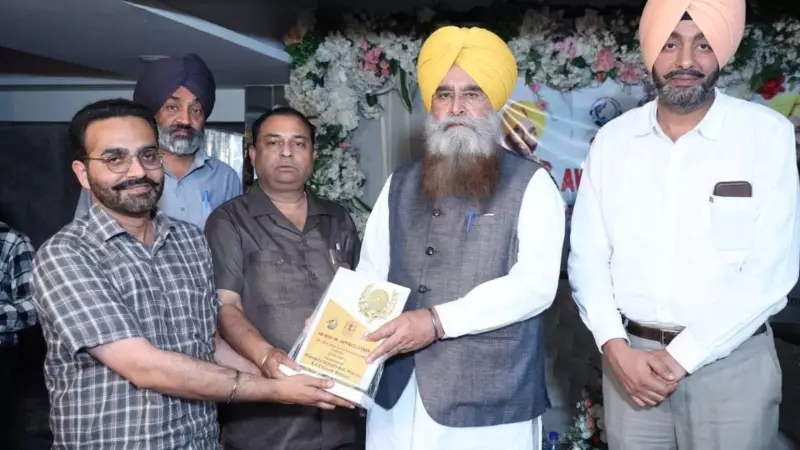
Gill's expertise, honed through training from Guru Angad Dev Veterinary and Animal Sciences University (GADVASU) in Ludhiana, has earned him widespread acclaim. In March 2025, he was honoured with the Chief Minister Award by GADVASU and received an appreciation letter from Punjab Agriculture Minister Gurmeet Singh Khuddian. Officials from the central Fisheries Department have also visited his farm to study the successful model.

A Model for the Future of Farming
Dr. Gill, now having recovered his initial investment, sees his journey as a blueprint for other farmers. He advises beginners to start small with one or two tanks after gaining proper technical knowledge. "We must break out of the repetitive cycle," he urges, advocating for innovative, technology-driven systems in agriculture and allied fields to generate higher income from limited land.
Gurpreet Singh, Director and Warden of Fisheries Punjab, lauds Gill as a trailblazer, demonstrating that high-density, technology-driven fish farming can be a game-changer for North India's agricultural economy. This story of a dentist-turned-aquaculture pioneer proves that with innovation and technical skill, Indian farmers can reel in extraordinary success.