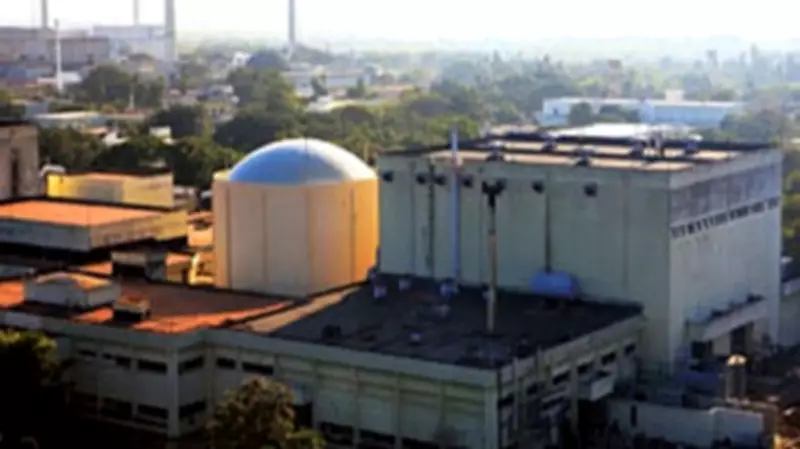
India has achieved a significant milestone at the Kalpakkam nuclear complex, marking a leap forward in the country's nuclear technology capabilities. The Kalpakkam site, located in Tamil Nadu, is home to the indigenous fast breeder reactor (FBR), which represents a crucial step in India's three-stage nuclear power program. This achievement underscores India's growing self-reliance in nuclear energy and its commitment to sustainable power generation.
What is the Kalpakkam Milestone?
The milestone refers to the successful commissioning and operation of the Prototype Fast Breeder Reactor (PFBR) at Kalpakkam. This 500 MWe reactor is the first of its kind in India and a key component of the country's nuclear power strategy. Fast breeder reactors are designed to produce more fissile material than they consume, thereby enhancing fuel efficiency and reducing nuclear waste. The PFBR uses a mixed oxide of plutonium and uranium as fuel, with liquid sodium as a coolant.
Significance for India's Nuclear Program
The Kalpakkam milestone is pivotal for India's three-stage nuclear program, which aims to utilize the country's abundant thorium reserves. The first stage involves pressurized heavy water reactors (PHWRs), which produce plutonium. The second stage, where the PFBR fits in, uses this plutonium to generate power and breed uranium-233 from thorium. The third stage will employ reactors running on thorium-uranium-233 fuel. By successfully operating the PFBR, India has validated the technology needed to transition to the third stage, potentially unlocking vast energy resources.

Technological Achievements
The PFBR at Kalpakkam is a testament to India's engineering prowess. It involves complex systems for handling sodium, which is highly reactive with air and water. The reactor's design includes multiple safety features to prevent accidents. India has developed indigenous capabilities in manufacturing reactor components, including the sodium-cooled fast reactor core, steam generators, and fuel handling systems. This reduces dependence on foreign technology and enhances national security.
Impact on Energy Security
With the successful operation of the PFBR, India can now look forward to scaling up fast breeder technology. This will significantly boost the country's nuclear power capacity, contributing to energy security and reducing carbon emissions. The PFBR is expected to generate electricity at competitive costs, making nuclear power a viable option for baseload power. Moreover, the technology can utilize spent fuel from existing reactors, thereby closing the nuclear fuel cycle and minimizing waste.
Challenges and Future Prospects
Despite the success, challenges remain. The PFBR has faced delays due to technical complexities and regulatory hurdles. However, the lessons learned from Kalpakkam will inform the design and construction of future fast breeder reactors. India plans to build six more fast breeder reactors by 2030, with a total capacity of 3,000 MWe. The Kalpakkam milestone thus sets the stage for a new era in Indian nuclear energy, promising a sustainable and secure energy future.