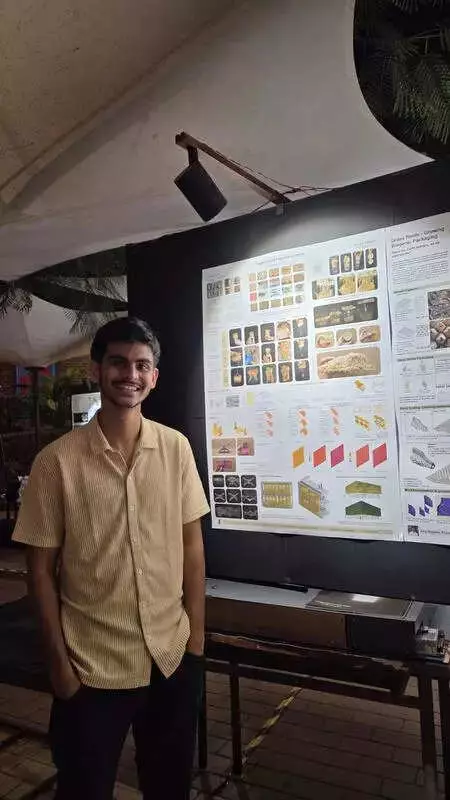
Ahmedabad's CEPT University recently became a hub for sustainable innovation as its students unveiled a series of groundbreaking projects at the annual Winter Exhibition. The event highlighted a determined shift towards biodegradable materials and circular design, with practical solutions crafted from everyday agricultural waste.
From Farm Waste to Building Insulation
One of the most promising exhibits featured a simple yet revolutionary material: insulation sheets made from groundnut shells. Master's student Shubham Kavale and his team presented this bio-composite, which offers a viable alternative to polluting materials like polystyrene and expandable foam.
The process involves binding discarded groundnut shells with starch and strengthening them with natural additives. "This material utilizes agricultural waste that is typically thrown away or used as cattle feed," explained Kavale. He emphasized its dual potential, noting, "It has the capability to function both as effective insulation and as a heat shield, helping keep interiors cooler while reducing our reliance on synthetic products."

A Studio Focused on Computational Design and Sustainability
Kavale is part of the Master's in Computational Design and Fabrication (MCDF) studio. This year, the program's cohort dedicated their research to exploring eco-friendly materials and circular economy principles. Program chair Jinal Shah stated that the students experimented widely with various natural resources.
"While some team members re-imagined applications for loofah fibre and beehive gum, others innovated with sawdust to create lifestyle accessories," Shah remarked, outlining the diverse scope of projects undertaken.
Loofah Fibre and Mushroom Leather Take Center Stage
Another standout installation, dubbed The Loofah Project, explored the versatility of natural loofah fibre. The team developed prototypes for seating chairs and footwear alternatives. This initiative directly addresses the environmental and ethical concerns of the leather industry by offering a plant-based material that reduces animal harm.
Further pushing the boundaries of bio-fabrication, students also exhibited leather derived from mycelium mushrooms. This fungal-based material was fashioned into footwear and various lifestyle products, showcasing its durability and aesthetic potential.
Adding to the suite of sustainable solutions, another team worked on biodegradable packaging material. This innovation can be molded into different shapes using specialized forms, presenting a compelling answer to the global plastic packaging crisis.
The Winter Exhibition at CEPT University successfully demonstrated how academic research and design thinking can converge to create tangible, sustainable alternatives. These projects from Ahmedabad point towards a future where industrial and agricultural waste are valuable resources, fostering a cleaner, more circular economy.