

Ahmedabad Student Pioneers Unhackable Communication Network
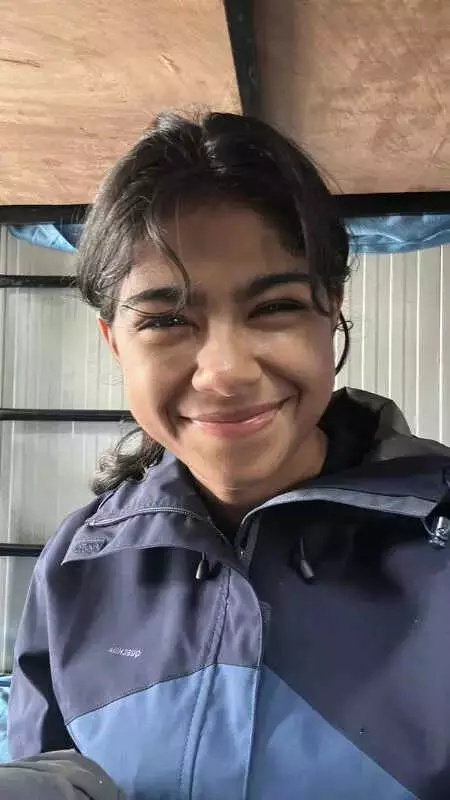
In an era where digital security breaches have become commonplace, a innovative student from CEPT University has developed a revolutionary solution using one of the most unexpected mediums - water pipes. Kartikee Mahadik, a third-year BTech student at CEPT's faculty of technology, has created a physical message transfer system that completely bypasses traditional digital networks.
The Inspiration Behind the Innovation
The project holds personal significance for Kartikee, who comes from a distinguished military family. She is the daughter of Col Santosh Mahadik, who was martyred about a decade ago while fighting militants and was posthumously awarded the Shaurya Chakra. Her mother, Swati, continued the family's service tradition by joining the Indian Army. This background deeply influenced Kartikee's understanding of security needs.
"My family's background helped me identify the problem," Kartikee explains. "Cybersecurity is a concern for all, and more so for highly sensitive establishments who work on different ways to secure data. I thus focused on existing water supply pipes as a ubiquitous but innocuous way to carry sensitive information."

How the Water Pipe Communication System Works
The system represents a sophisticated evolution of the 'sneakernet' concept, where data is physically transported rather than transmitted electronically. At designated nodes, users can place sensitive information - whether printed notes, handwritten documents, or digital devices like pen drives - inside sealed, water-resistant capsules.
These capsules are then introduced into the building's water distribution network through specially designed valves. The real innovation lies in the programmable solenoid valves that control the capsule's journey through the pipes.
Kartikee elaborates: "Once the starting and destination nodes are entered, solenoid valves across the water network redirect flow so the capsule travels only along the intended route. If a node is not the destination, its valve remains open to let the capsule pass. If it is the final node, the slightly curved end of the seize mechanism gently traps the sphere for retrieval."
Technical Specifications and Practical Applications
The capsule design is crucial to the system's functionality. During experimentation, the team used 1-inch pipes, but the technology can scale to different diameters commonly found in residential and commercial buildings. The capsules can be programmed with additional security features like fingerprint recognition or code-based opening mechanisms.
"The capsule or sphere can be programmed to open only by fingerprint or code," Kartikee notes, adding that "it can be made with 3D printing technology" for easy manufacturing and customization.
Professor Tushar Bose, who co-taught the studio with Professor Tapan Betai, recognizes the project's significance. "The idea can be expanded to a grid level as the simple mechanism such as programmable valves are required to operate it along with spheres suitable for the specific pipeline. It has potential for practical applications," he stated.
The project emerged as part of CEPT University's semester-ending studio, which saw multiple students working on water distribution network solutions. While others focused on challenges like hilly terrain water supply, urban flood prevention, and efficient water networks, Kartikee's approach stood out for its unique security applications.
This innovative system offers a viable alternative for organizations requiring ultra-secure communication channels, completely avoiding the vulnerabilities associated with internet, Wi-Fi, Bluetooth, and other digital pathways that are increasingly susceptible to cyber attacks.






