Israeli Scientists Discover Boiled Potatoes Can Power Lights for Over a Month
In a groundbreaking study published in Smithsonian Magazine, researchers at The Hebrew University of Jerusalem have revealed that a simple potato, with a minor tweak, can become a highly effective energy source. By boiling a potato for eight minutes, they caused cell membrane ruptures within its internal structure, which significantly reduced the internal resistance to electrical current flow. This process boosted the electricity produced by the potato to ten times its initial amount, paving the way for innovative, low-cost power solutions.
How the Potato Battery Works: A Chemical Bridge for Electricity
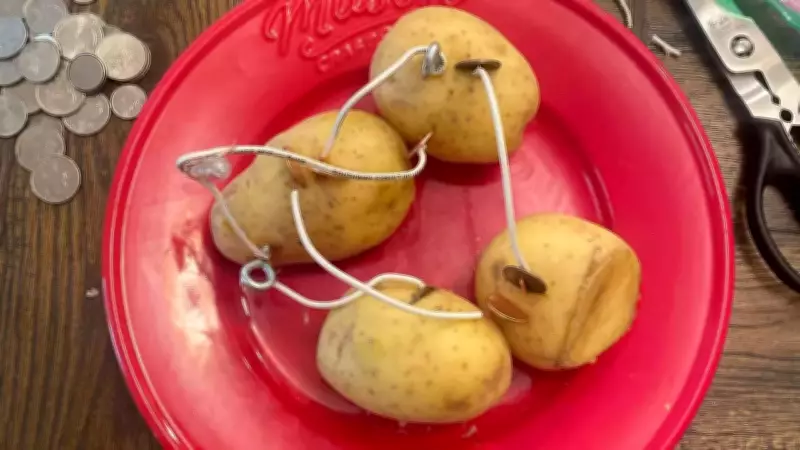
Contrary to popular belief, potatoes do not inherently contain electricity. Instead, they act as salt bridges that facilitate chemical reactions. When a zinc-coated nail (serving as the anode) and a copper coin (the cathode) are inserted into the potato, a redox (reduction-oxidation) reaction occurs. The zinc interacts with the potato's phosphoric acid, releasing electrons that travel through wires to the copper. This flow of electrons generates the current needed to power devices like LED light bulbs or digital clocks, making it a simple yet effective energy source.
Longevity and Practicality: Can It Really Last a Month?
The short answer is yes, but with important considerations. A single whole potato typically produces a low voltage output, ranging from approximately 0.5 to 0.9 volts. To achieve adequate voltage for lighting a room, multiple boiled potato slices must be connected in series. If set up correctly, this "veggie circuit" can power a low-energy bulb for more than 30 days, provided there is sufficient voltage and the potatoes do not decompose. Researchers noted that even dried-out potatoes remain effective as electrolytes until they fully break down, ensuring durability in practical applications.

Cost-Effectiveness: A Green Battery for the Underserved
The primary goal of this research was to develop a "Green Battery" for the 1.2 billion people worldwide who lack access to electricity from power grids. The findings indicate that treated potato batteries are approximately fifty times cheaper than conventional 1.5-volt AA or D-cell batteries. Moreover, compared to kerosene lamps commonly used in undeveloped areas, potato batteries are six times less expensive and far safer. They provide flicker-free light for activities like reading or medical assistance, without the fire hazards or harmful gases associated with kerosene.
Implications for Sustainable Energy and Off-Grid Communities
This discovery holds significant promise for off-grid communities seeking sustainable and renewable energy sources. By utilizing a common vegetable like the potato, these communities can access affordable lighting solutions that are both eco-friendly and reliable. The research underscores the potential of simple, natural materials to address global energy challenges, offering a practical alternative to traditional batteries and fossil fuels. As scientists continue to explore such innovations, the potato battery could play a crucial role in bridging the energy gap for millions of people around the world.