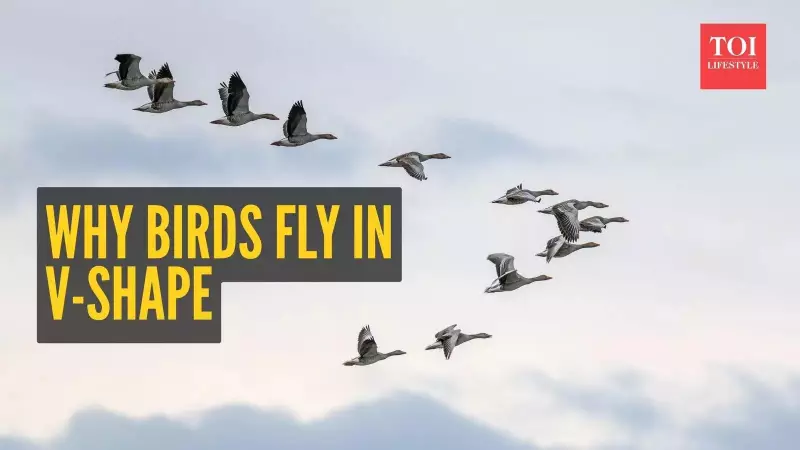
Have you ever looked up at the sky and seen a perfect V-shaped pattern of birds flying together? This common sight is far more than just a pretty formation. It is a sophisticated, energy-saving strategy that allows birds to undertake incredibly long migrations with less effort.
The Aerodynamic Secret of the V Formation
When the lead bird in a flock flaps its wings, it does more than just push itself forward. It creates swirling currents of air. The birds flying strategically behind catch the upward-moving part of these currents, which gives them a significant free lift. This lift reduces the energy they need to stay airborne, making long-distance travel much more manageable.
This is not a static formation with one permanent leader. The birds practice remarkable teamwork by taking turns at the front. The lead position is the most strenuous, as that bird breaks through the still air. By rotating this duty, the entire flock shares the burden, ensuring no single member gets exhausted.

High-Tech Research Uncovers Avian Precision
A detailed study published in the journal Nature provided groundbreaking evidence of how precise this behaviour is. Researchers focused on a group of young northern bald ibises during a reintroduction project in Europe. The birds were guided by a microlight plane on their migration route from Austria to Italy.
Each ibis was fitted with a tiny, custom-built data logger. This device meticulously tracked its exact position and every single wingbeat. Analysing this data, scientists could see that the birds were not merely following each other. They were actively synchronising their wing flaps and constantly adjusting their position to maximise the aerodynamic benefit from the bird ahead.
James Usherwood, a biomechanist from the Royal Veterinary College in the UK, involved in the research, highlighted the complexity. He noted that the air behind a flapping wing becomes very turbulent, or "pretty darn wiggy." The birds' ability to position themselves perfectly in this chaotic airflow is what makes the formation so effective.
Which Birds Use This Clever Trick?
While this particular study was conducted on ibises, scientists believe the same energy-saving principle applies to other large birds with long wings. Species like geese, pelicans, and storks are likely masters of this V-formation flight.
However, smaller birds with rapid wingbeats probably do not gain the same advantage. Their fast movements create uneven, choppy air currents that are much harder for a trailing bird to ride efficiently.
The majestic V-formation in the sky is a powerful testament to nature's ingenuity. It is a simple yet profoundly effective example of cooperation and aerodynamic intelligence, evolved over millennia to help these remarkable travellers conquer vast distances.