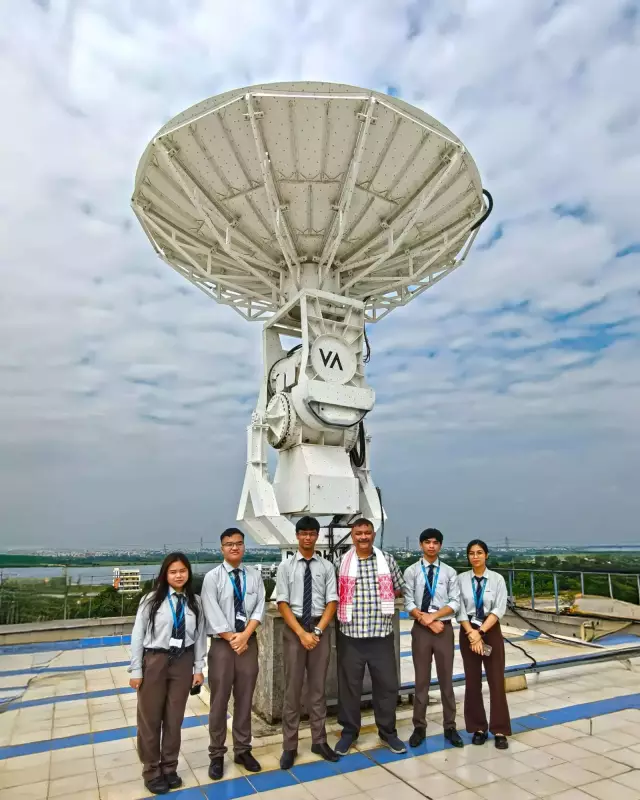
In a landmark achievement for India's northeastern region, Assam Don Bosco University (ADBU) is poised to launch the area's first-ever satellite mission. Named Lachit-1, the satellite is scheduled for launch on January 12 at 10:17 am from the Satish Dhawan Space Centre in Sriharikota.
A Historic Mission for the Northeast
Official records confirm that until now, no satellite has been registered to any entity in India's eight northeastern states. This makes the Lachit-1 mission a historic first for the region. The satellite draws its name from the revered 17th-century Ahom general, Lachit Borphukan, symbolizing a deep connection to the region's history and pride.
Assam Don Bosco University, a private institution, initiated its space program in 2022. The Lachit-1 project is a fully student-led initiative that has brought together talent from across the northeast. The mission's primary goal is to demonstrate satellite-based store-and-forward communications, which have significant applications in disaster response and regional capacity building.

Mission Details and Technological Collaboration
The launch will be conducted under the Polar Access-1 programme of Hyderabad-based Dhruva Space, riding aboard ISRO's PSLV-DL-C62 rocket. Once deployed in orbit using Dhruva Space's DSOD-1U separation system, Lachit-1 will begin its 12-month operational life.
The cube satellite is equipped with Internet of Things (IoT) technology designed to monitor key atmospheric and environmental parameters. Over its one-year mission, it will collect vital data on:
- Atmospheric pollution levels
- Temperature variations
- Humidity levels
- Other critical environmental indicators
Professor Vikramjit Kakati, mission director of the Lachit-1 project and director of ADBU's R&D Cell, stated that the university has steadily expanded its activities in satellite engineering, mission operations, and ground-station management since 2022. The entire project has been funded by ADBU's own resources.
Ground Control and Future Impact
A dedicated Mission Control Room has been established at ADBU's Tapesia Campus near Guwahati. From this command center, the university will independently track and communicate with Lachit-1 once the satellite is activated after deployment.
The collaboration with Dhruva Space has been crucial. Avinash Maramraju, a director at Dhruva Space, highlighted that their cross-functional engineering teams mentored ADBU students through the complete satellite lifecycle. This mentorship covered design, engineering, assembly, integration, and testing of the flight-ready systems.
In a significant post-launch development, Lachit-1 will be made accessible to the global amateur radio community. Licensed operators worldwide will be able to use the satellite for communications and experimentation. Furthermore, in partnership with the National Institute of Amateur Radio and ADBU, Dhruva Space will conduct structured workshops and training programs. These initiatives will focus on using amateur satellites for disaster communication and emergency-response scenarios, directly benefiting the region's resilience planning.
The launch of Lachit-1 marks a giant leap for the northeastern states, showcasing homegrown talent and paving the way for future technological self-reliance in space applications. It stands as a testament to the region's growing capabilities in high-tech fields and its commitment to using technology for societal and environmental benefit.