Long before humans walked the planet, Earth was home to creatures that seemed to emerge straight out of a science fiction film. Giants resembling dinosaurs with absurdly long necks, massive fish capable of walking on land, and other mega-beasts ruled the planet before being swiftly wiped from existence.
T. rex
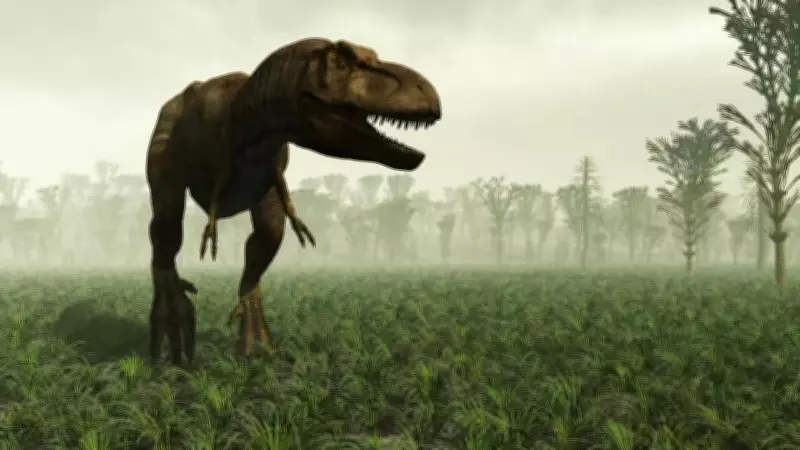
Long before humans walked the Earth, a giant ruled it: Tyrannosaurus rex, commonly known as T. rex, one of the most fearsome predators in history. This 40-foot-long predator roamed the forests of North America during the Late Cretaceous Period, about 66 million years ago. Moving at approximately 12 miles per hour, it left its prey with almost no chance of survival. With a bite force of about 12,800 pounds per square inch, it could crush bone like chalk.
Megalodon
Imagine a great white shark, then triple its size. That is Otodus megalodon, the ocean's ultimate apex predator. These mega-beasts cruised through warm seas during the Miocene and Pliocene epochs. Reaching up to 60 feet in length, with serrated teeth the size of a human hand, this giant did not merely eat fish; it hunted whales. They went extinct approximately 3.6 million years ago.

Anomalocaris
Hundreds of millions of years before the first dinosaur walked the Earth, a bizarre creature ruled the oceans. Described as an unusual shrimp, Anomalocaris is regarded as the world's first apex predator, akin to the killer whale of its day. It used two large, spiny, claw-like appendages to catch and crush prey. Speed, agility, and keen eyesight were its superpowers.
Spinosaurus
These mighty creatures were larger than T. rex, regarded as the largest carnivorous dinosaurs ever found, with most reaching 50 feet in length. They ruled the lands of North Africa during the Cenomanian stage of the Late Cretaceous Period, hunting both terrestrial and aquatic prey.
Tiktaalik
If Tiktaalik were to contest an election, it might win by a landslide, as it literally bridged two worlds. This creature was not a typical fish; it could walk on land. Living about 375 million years ago during the Late Devonian Period, Tiktaalik possessed fish-like features such as gills and scales, alongside a flat head, a mobile neck, and limb-like fins strong enough to prop up its body. It could navigate shallow waters and even haul itself onto muddy shores. Tiktaalik is considered a missing link in vertebrate evolution.
Woolly Mammoth
Imagine an elephant built for the Ice Age. The woolly mammoth (Mammuthus primigenius) roamed frozen tundra alongside early humans. Standing 11 feet tall with tusks curving up to 15 feet, these creatures were hunted by our ancestors. They vanished only 4,000 years ago, while the Egyptian pyramids were already standing.
Titanoboa
After the dinosaurs died, snakes became rather ambitious. Titanoboa cerrejonensis slithered through Colombian rainforests 60 million years ago. These giant snakes measured up to 48 feet and weighed over a ton, making them constrictors from which escape was nearly impossible.
Tanystropheus
For decades, paleontologists debated what Tanystropheus was: a dinosaur or just another reptile. This Triassic reptile lived approximately 242 million years ago in what is now Europe and the Middle East. Its neck was absurdly long, more than half of its 20-foot body length. Two types existed: one aquatic that hunted fish, and the other land-dwelling.