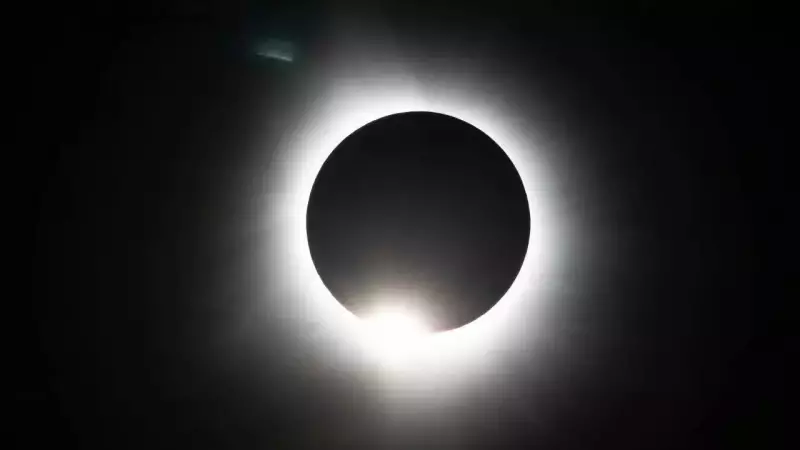
After a period of relative quiet, the heavens are preparing for a spectacular show. The year 2026 is set to break the calm with a remarkable series of celestial events that will reignite public fascination with the night sky. This isn't about a single, fleeting moment but a rhythmic sequence of eclipses and planetary gatherings that will encourage people everywhere to look up more often.
A Year of Rhythmic Eclipses: From Ring of Fire to Blood Moon
The core of 2026's celestial calendar features four eclipses spread across six months, signaling the start of a busier period that extends into 2027 and 2028. The interest lies in their close succession, making rare events feel more frequent and connected.
The year kicks off with an annular solar eclipse, famously known as a 'ring of fire,' on 17 February 2026. During this event, the Moon will pass in front of the Sun but not cover it completely, leaving a brilliant circle of sunlight visible. At its peak, 96% of the Sun will be obscured for up to 2 minutes and 20 seconds. Unfortunately, its path crosses remote southern regions, limiting direct viewers.

Soon after, on 3 March 2026, a total lunar eclipse will grace the sky. For approximately 58 minutes, the Moon will glow a deep red—a phenomenon often called a 'Blood Moon.' This stunning effect is caused by sunlight filtering through Earth's atmosphere. This event holds extra significance as it will be the last total lunar eclipse until 2029.
The Crown Jewel: Europe's First Total Solar Eclipse in Decades
The most anticipated event of 2026 arrives on 12 August 2026. On this day, a total solar eclipse will be visible from parts of the North Atlantic and, crucially, mainland Europe. Totality, the phase where the Sun is completely covered, will last up to 2 minutes and 18 seconds, peaking near Iceland. This will be the first total solar eclipse visible from mainland Europe since 1999, a truly historic moment for millions.
This eclipse is not an isolated incident but the beginning of a powerful trio. It starts a sequence that includes another total solar eclipse on 2 August 2027, which will last a staggering 6 minutes and 22 seconds (the longest of this century), followed by another on 22 July 2028. These three profound events occur within just 710 days, a rare alignment of orbital cycles.
Planetary Gatherings and the Future Ring of Fire
Beyond eclipses, 2026 will treat observers to noticeable planetary alignments. In mid-2026, Venus and Jupiter will pass within one degree of each other, easily visible to the naked eye. Later in the year, an alignment featuring up to five planets stretched across the horizon is expected. These are subtle, quiet events that reward patient observation.
The annular eclipse sequence also continues beyond February 2026. A long 'ring of fire' will occur on 6 February 2027, lasting up to 7 minutes and 51 seconds. The sequence peaks with an extraordinarily long annular eclipse on 26 January 2028, which will last 10 minutes and 27 seconds, concluding at sunset for added visual drama.
As 2026 concludes, the celestial activity shows no signs of stopping. The sky remains active, offering not an ending but a clear promise that more incredible sights are already on their way, inviting everyone to reconnect with the wonders above.