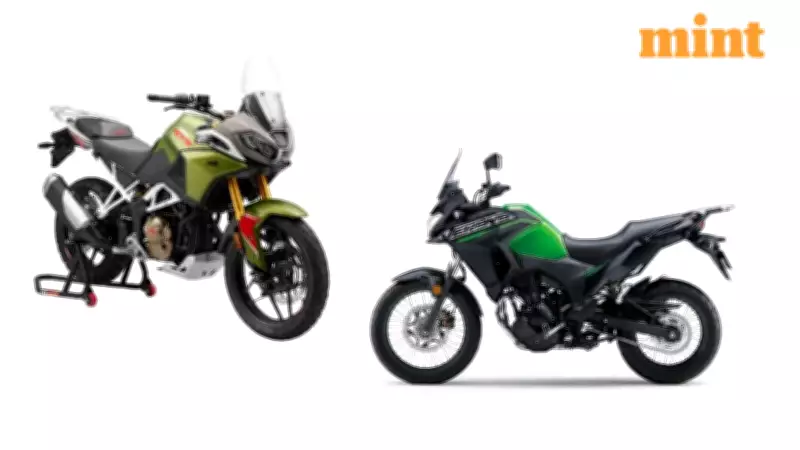
TVS Apache RTX 300 vs Kawasaki Versys-X 300: A Detailed Showdown in India's Thriving ADV Market
The Indian motorcycle market has witnessed a significant surge in demand for adventure (ADV) motorcycles, particularly in the affordable sub-300 cc segment. Recognizing this trend, manufacturers are aggressively expanding their portfolios to capture this burgeoning interest. In a strategic move, TVS Motor Company launched the highly anticipated Apache RTX 300, positioning it as a competitive entry in this crowded space. This article provides an in-depth comparison between the TVS Apache RTX 300 and the Kawasaki Versys-X 300, analyzing which model offers superior value for money to Indian consumers.
Market Context: The Rise of Affordable Adventure Motorcycles
Adventure motorcycles have transitioned from niche offerings to mainstream favorites in India, driven by increasing consumer appetite for versatile bikes capable of handling both city commutes and off-road excursions. The sub-300 cc segment, in particular, has seen explosive growth, with sales numbers climbing steadily as riders seek accessible entry points into the ADV category. TVS's introduction of the Apache RTX 300 is a direct response to this market shift, aiming to leverage its brand reputation and competitive pricing to attract enthusiasts.
Price Comparison: Affordability vs Premium Positioning
A critical factor in any motorcycle purchase is pricing, and here, the TVS Apache RTX 300 holds a distinct advantage. Available in multiple variants, the Apache RTX 300 is priced between ₹199,000 and ₹234,000 (ex-showroom), making it one of the most affordable ADVs in its class. In contrast, the Kawasaki Versys-X 300 commands a significantly higher price tag of ₹349,000 (ex-showroom). This substantial price difference highlights TVS's strategy to democratize adventure riding, while Kawasaki maintains a premium positioning that may appeal to brand loyalists or those seeking higher-end features.

- TVS Apache RTX 300: Base variant starts at ₹199,000, with top variants and built-to-order options reaching up to ₹234,000.
- Kawasaki Versys-X 300: Priced at ₹349,000, offering limited color options like Candy Lime Green and Metallic Flat Spark Black.
The Apache RTX 300's pricing not only undercuts the Versys-X 300 but also positions it favorably against other rivals like the KTM 250 Adventure and Suzuki V-Strom SX, reinforcing its value proposition in a competitive landscape.
Powertrain and Performance Specifications
When it comes to performance, both motorcycles offer liquid-cooled engines with slight variations in output. The TVS Apache RTX 300 is equipped with a 299.1 cc engine that delivers 36 bhp of power at 9,000 rpm and 28.5 Nm of torque at 7,000 rpm. On the other hand, the Kawasaki Versys-X 300 features a 296 cc engine producing 38.46 bhp at 11,500 rpm and 26 Nm of torque at 10,000 rpm. Both models come with a 6-speed gearbox, ensuring smooth shifting across terrains.
- Power Output: The Kawasaki Versys-X 300 generates slightly more power (38.46 bhp) compared to the TVS Apache RTX 300 (36 bhp), which may benefit high-speed cruising.
- Torque Delivery: The TVS Apache RTX 300 excels in torque (28.5 Nm), offering better low-end grunt and acceleration, ideal for off-road adventures and city riding.
- Engine Characteristics: The Versys-X 300's power peak at higher RPMs suggests a sportier tuning, while the Apache RTX 300's torque advantage at lower RPMs enhances practicality.
This powertrain comparison reveals a trade-off: Kawasaki offers a marginal power edge, but TVS provides superior torque, which can be more beneficial in real-world riding conditions, especially for adventure touring.
Value Proposition and Segment Positioning
The TVS Apache RTX 300 emerges as a compelling choice for budget-conscious adventurers, combining aggressive pricing with robust performance specs. Its torque-rich engine and affordable entry point make it accessible to a wider audience, potentially accelerating the adoption of ADV motorcycles in India. Meanwhile, the Kawasaki Versys-X 300, with its higher price and slight power advantage, caters to riders willing to invest in a premium brand and potentially refined engineering.

In summary, the choice between these two motorcycles hinges on individual priorities. For those seeking maximum value and torque-focused performance, the TVS Apache RTX 300 is a standout option. However, for enthusiasts prioritizing brand prestige and peak power, the Kawasaki Versys-X 300 remains a viable, albeit costlier, alternative. As the Indian ADV segment continues to evolve, such comparisons will guide consumers in making informed decisions tailored to their riding needs and financial considerations.