At the sprawling tech carnival that is CES 2026 in Las Vegas, a device from Samsung left this journalist in a state of awe. The Samsung Galaxy Z TriFold, a concept turned reality, is not just another smartphone. It's a bold vision of a future where your pocket device seamlessly morphs into a tablet and even a desktop workstation. While its official launch in India remains uncertain, its glimpse at the world's biggest tech show offers a tantalising preview of what's to come.
A Shapeshifting Marvel: From Phone to Expansive Tablet
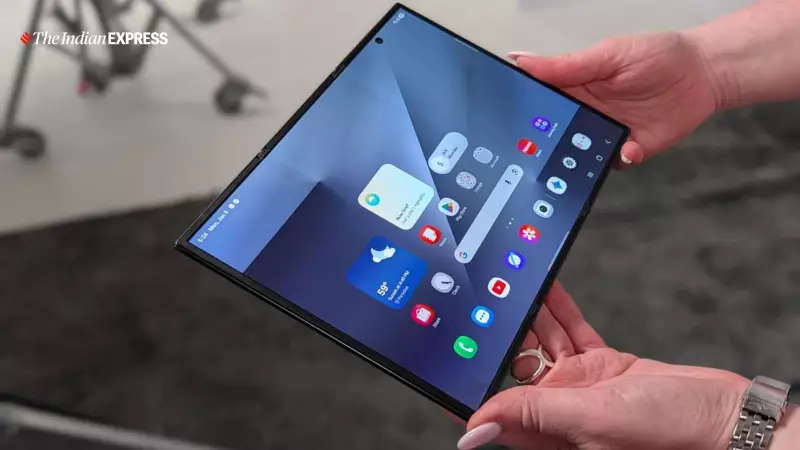
Holding the Samsung Galaxy Z TriFold is an experience that feels borrowed from science fiction. When closed, it masquerades as a sleek, modern bar phone with a 6.5-inch outer display. The magic begins when you unfold it. First, you flip the screen open to the right, then unfold the inner layer to the left, revealing a massive 10-inch canvas. This is a significant leap from the 8-inch display on the Galaxy Z Fold 7, achieved by incorporating two titanium hinges that allow the screen to fold in two places.
This design philosophy sets it apart from competitors like Huawei's Mate XT. While Huawei's tri-fold uses an accordion style letting you use one, two, or three panels, Samsung's version transitions directly from a single panel to the fully expanded triple-panel mode. A clever protective design sees the delicate inner screen folding inwards, shielded by a glass-protected outer display—a smart move for durability.

Power, Polish, and a Learning Curve
Despite being a first-generation product, the Galaxy Z TriFold feels surprisingly polished. It's powered by the Qualcomm Snapdragon 8 Elite chipset and sports a camera array identical to the Fold 7, including a 200MP primary lens. A major upgrade is the 5,400mAh battery, roughly 23% larger than the Fold 7's, though it must fuel that expansive screen.
The device runs Android 16 with One UI 8, and Samsung has introduced thoughtful software tweaks. A standout feature is the ability to run three apps side-by-side, each in a comfortable smartphone aspect ratio—a boon for multitaskers, architects, or content creators. It also supports Samsung DeX locally, turning the large screen into a full desktop environment without an external monitor.
However, there is a learning curve. Opening the device incorrectly triggers a visual warning and intensifying haptic feedback, guiding users. When closed, at 12.9mm thick and 300 grams, it feels like holding two phones stacked together. But unfolded, it achieves a remarkably slim, almost paper-thin profile.
The Reality Check: Niche Appeal and Future Potential
The TriFold is a statement, not a mass-market device. With a price tag of approximately 3.59 million won (around $2,430) and a limited release in select markets like South Korea and the US, it's an ultra-premium experiment. The journalist's experience highlights that while the hardware is futuristic, the software experience on foldables still needs refinement to truly blend phone and tablet interfaces seamlessly.
For Indian consumers, the device remains a fascinating glimpse into a possible future. It represents Samsung's commitment to pushing the form factor envelope. The Galaxy Z TriFold is more than a phone; it's a hybrid device—a phone, tablet, and potential PC replacement all in one. Its arrival, even if not imminent in India, signals the exciting and flexible direction mobile technology is headed, blurring the lines between our devices in ways once only imagined in movies.