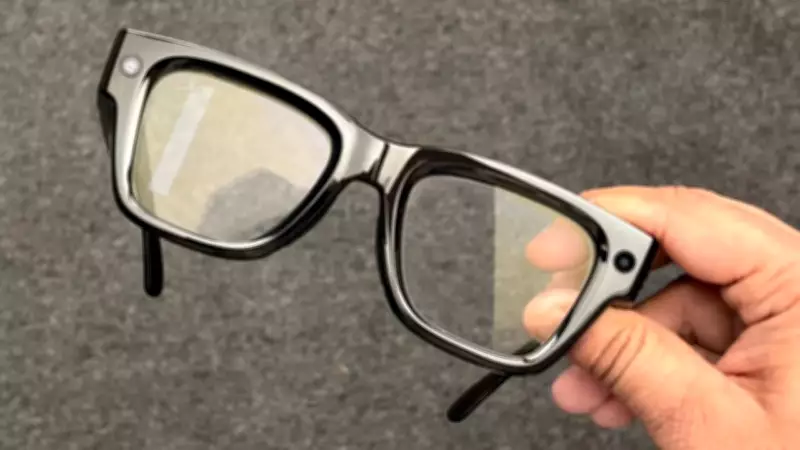
Meta Unveils Ray-Ban Smart Glasses with Display at India AI Impact Summit
At the recent India AI Impact Summit, Meta, the parent company of Facebook, showcased and provided live demonstrations of its latest smart glasses innovation, the Meta Ray-Ban Display. This advanced wearable technology represents a significant step forward in augmented reality devices, blending fashion with functionality in a way that could redefine everyday computing.
Design and Appearance: Discreet Yet Powerful
At first glance, the Meta Ray-Ban Display glasses appear indistinguishable from classic Ray-Ban Wayfarer sunglasses, maintaining a stylish and familiar aesthetic that won't draw unnecessary attention on the street. However, upon closer inspection, the technological enhancements become apparent. Each temple features a 12-megapixel ultra-wide camera with 3x zoom capability, enabling visual capture and analysis. A specialized strap integrated into the design reads hand movements to control the display interface.
The glasses are equipped with built-in speakers, multiple microphones, and Meta's sophisticated AI assistant, which processes and interprets the user's visual environment in real-time. This creates a subtle augmented reality experience that remains almost invisible during daytime use, allowing for seamless integration into daily activities without disrupting natural vision.

Display Technology and Visual Interface
The core innovation lies in the display system. A micro-projector embedded within the lens projects text, icons, and essential information directly into the user's field of vision. This technology eliminates the need to constantly retrieve a smartphone for notifications, providing a hands-free information stream. Unlike the immersive, full-color overlays often depicted in science fiction, the Meta Ray-Ban Display offers a small, unobtrusive readout in the corner of the visual field that doesn't obstruct normal sightlines.
Key functionalities include navigation assistance, with turn-by-turn directions similar to Google Maps appearing directly before the eyes. Users reported that the futuristic interface required some adjustment time to differentiate between the display content and the real-world environment, but the learning curve proved manageable with practice.
Gesture Controls and Voice Command Capabilities
Meta has incorporated gesture controls into the glasses, allowing users to swipe along the temple to scroll through messages, tap to select items, and perform air-pinching motions to zoom in on content. While these controls sound promising in theory, initial user experiences at the summit indicated they can feel slightly awkward in practical application. Meta representatives noted that gesture recognition accuracy improves significantly with continued use as the system adapts to individual movement patterns.
Voice commands proved more reliable during demonstrations. Using "Hey Meta" as the wake word, users can initiate WhatsApp calls, ask questions about their surroundings, or request information. The directional sound technology channels audio directly into the ears, while the microphones effectively capture voice even in noisy environments like the bustling summit booth. Although not as immersive as dedicated earbuds, the audio quality suffices for calls and navigation prompts.
AI Assistant Performance and Practical Applications
The integrated AI assistant demonstrated impressive contextual understanding during tests. When asked "What am I seeing?" in the exhibition setting, it correctly identified the environment as a conference booth. The assistant can also analyze documents or text, providing explanations after processing time. This functionality suggests practical applications for information retrieval, language translation, and accessibility features.
Battery Life and Technical Specifications
Meta claims the glasses provide approximately six hours of continuous use on a single charge, with the accompanying charging case offering up to twenty-four hours of additional power. This battery performance supports extended daily use for most scenarios, though heavy users might need midday recharging.

Privacy Considerations and Market Positioning
The Meta Ray-Ban Display glasses raise important privacy questions due to their always-on cameras and recording capabilities. While offering a compelling glimpse into hands-free computing's future, they operate in a regulatory gray area regarding data collection and user consent.
Final Assessment and Market Viability
These smart glasses represent an impressive technological achievement, particularly in their seamless design integration. However, they remain firmly in the early adopter phase, with gesture controls requiring refinement and the overall experience demanding user adaptation. They cannot replace smartphones for comprehensive computing needs but serve as a valuable supplementary device for specific applications. Priced at $799 in international markets, their India launch remains pending, though the summit demonstration indicates Meta's interest in this crucial market.
The Meta Ray-Ban Display glasses ultimately offer a functional bridge between current wearable technology and future augmented reality systems, balancing innovation with practical limitations that will likely evolve through subsequent iterations.