

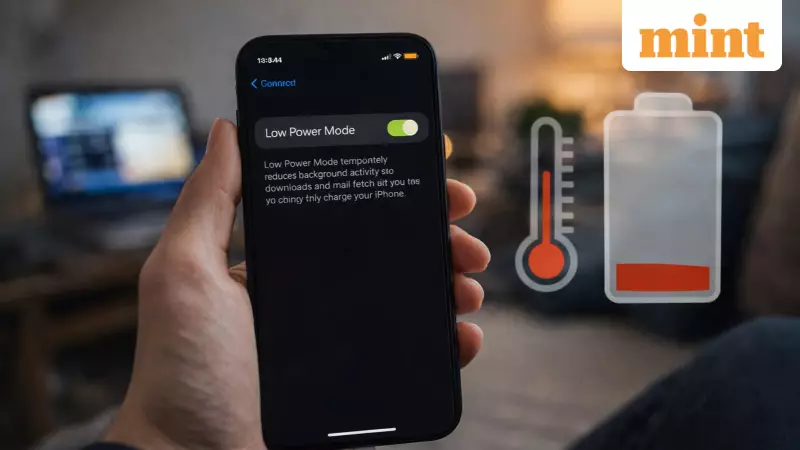
For many smartphone users in India, the Low Power Mode feature has become a topic of fierce debate. Some activate it only in emergencies when the battery dips into the red zone, while others swear by keeping it permanently on, believing it acts as an elixir for their device's longevity. However, the reality of what this mode does—and, more importantly, what it does not do—is often misunderstood. Updated on 5 January 2026, 07:55 PM IST, this analysis delves into the mechanics behind the feature.
The Core Function: It's About Behaviour, Not Battery Chemistry
At its fundamental level, Low Power Mode does not directly alter the physical battery inside your phone. Instead, it modifies how the device operates to conserve the existing charge. When enabled, you might notice a slight dimming of the screen, a reduction in background app refresh activity, smoother animations, and a general slowdown of non-essential tasks. The phone essentially becomes less busy, which is why you see the remaining battery percentage deplete at a slower rate during a single use cycle.
The common misconception arises when users assume this daily charge-saving translates directly to a slower ageing process for the battery itself. Battery health degradation is primarily governed by two factors: excessive heat and complete charge cycles. Each time a battery undergoes significant heating or a full 0% to 100% cycle, it loses a minuscule amount of its maximum capacity permanently.

How Low Power Mode Indirectly Preserves Battery Health
This is where Low Power Mode offers a secondary, indirect benefit. By curbing processor-intensive background processes, limiting peak performance, and reducing screen demand, the phone generates less internal heat. A cooler phone means a less stressed battery.
This indirect protection is most valuable during heavy usage scenarios that typically cause phones to warm up. Think of situations like:
- Using GPS navigation for extended periods while driving.
- Acting as a mobile hotspot for other devices.
- Streaming high-definition video for hours.
- Being in an area with poor cellular signal, forcing the radio to work harder.
In these instances, proactively turning on Low Power Mode can reduce thermal stress. Over months and years, these accumulated moments of reduced strain can contribute to better long-term battery health compared to consistently pushing the device to its limits. However, it is crucial to understand that Low Power Mode does not halt battery ageing altogether. A battery used daily will still degrade, regardless of the mode.
Strategic Use Beats Permanent Activation
The feature is not without its trade-offs. Users may experience delayed notifications, paused background uploads for photos, and slightly slower app refreshes. For this reason, keeping Low Power Mode on permanently is not necessarily the optimal strategy. The compromises can hinder the user experience without providing proportional long-term benefits for battery health, especially during light usage like browsing on Wi-Fi in a cool environment.
The most effective approach is strategic deployment. Enable Low Power Mode deliberately during known high-stress periods:
- When you physically feel your phone getting warm.
- When you know you will be away from a charger for an extended duration, like during travel days or long outdoor events.
- During the heavy-use activities mentioned earlier.
In essence, Low Power Mode is not a cure-all or a magical trick. It functions as a pressure release valve for your phone's battery. Using it intelligently at the right moments helps keep your device cooler and calmer when it needs it most. That is the true source of any long-term battery health benefit—not from running your smartphone in a perpetually restrained state.






